Politics and Society
IMF’s economic terrorism: Structural adjustment, “Capitalogenic” disease, and the fight to hold the World Bank accountable
From Washington’s Structural Adjustment Programs to a Nairobi courtroom — and a June 25 ruling that shielded the IMF even as it kept the case alive — a decades-long battle to make global lenders answer for their choices is entering a new, decisive phase.

The Architecture of Manufactured Poverty
For decades, the persistent poverty of the Global South has been framed by mainstream economists as a tragic but natural condition — a developmental lag waiting to be cured by foreign aid and free-market integration. Economic anthropologist Jason Hickel profoundly challenges this narrative. In his book The Divide: A Brief Guide to Global Inequality and its Solutions, and his subsequent academic research, Hickel argues that the impoverishment of developing nations is not a natural baseline, but the direct result of historical and ongoing resource extraction engineered by the Global North.
Central to this architecture of extraction are the International Monetary Fund (IMF) and the World Bank. For half a century, these institutions have prescribed sweeping economic overhauls for developing nations, often resulting in devastating human tolls. Yet, until very recently, they operated behind an impenetrable shield of legal immunity, bearing zero liability for the consequences of their interventions.
The mechanics of this dynamic were laid bare as early as 2003 by policy analysts John Cavanagh and Jerry Mander, writing in the CCPA Monitor. Their account describes a debt trap with its own internal gravity: “The more the borrowing, the greater the need for still larger loans, and borrowing became something of an economic addiction.” The World Bank, they documented, actively marketed its loans to newly independent former colonies, and when those loans generated dependencies, structural adjustment arrived not as a rescue but as a deepening. As Cavanagh and Mander observed, “once countries accepted the conditions of structural adjustment, the World Bank and the IMF rewarded them with still more loans, thus deepening their indebtedness — rather like a fireman pouring gasoline on a burning house to stop the blaze.”
I have repeatedly questioned the logic of the World Bank’s loans to Kenya’s health sector that are perennially and systematically looted, only for the IMF to later come around and “rescue’ the sector with even more loans!
The Anatomy of Devastation
The mechanism for this economic restructuring came primarily in the form of Structural Adjustment Programs (SAPs). During the debt crises of the 1980s and 1990s, the IMF and World Bank leveraged the desperation of Global South nations. In exchange for emergency loans or debt relief, developing countries were forced to implement severe austerity measures: slashing public spending on education, healthcare, and food subsidies; privatizing state enterprises; devaluing national currencies to accelerate resource exports; liberalizing financial markets to attract speculative short-term capital; and eliminating tariffs in ways that destroyed local industry and agriculture.
The macroeconomic results were catastrophic. Jason Hickel notes that during the post-colonial developmentalist era of the 1960s and 1970s, per capita income in the Global South grew at a robust 3.2 percent per year. Under structural adjustment in the 1980s and 1990s, that growth collapsed to a stagnant 0.7 percent.
The scale of debt accumulation across this period tells its own story. In 1980, the total external debt of all developing countries stood at $609 billion. After two decades of structural adjustment, by 2001 that figure had ballooned to $2.4 trillion — and Sub-Saharan Africa was spending four times more on debt service payments than on healthcare for its populations.
| $609B → $2.4T
Total developing-world external debt, 1980 to 2001 — the structural adjustment decades. Sub-Saharan Africa spent 4x more on debt repayment than on healthcare. (Cavanagh & Mander, CCPA Monitor, 2003) |
But the true cost of SAPs was paid in human lives. Hickel and global health experts have quantified the damage through systematic review: in Sub-Saharan Africa, structural adjustment was statistically associated with an additional 85.62 child deaths per 1,000 children, and an additional 360 maternal deaths per 100,000 live births.
Hickel and his colleagues classify this resulting morbidity and mortality as “capitalogenic” — meaning capital-driven — disease. When a nation is forced to prioritize foreign debt service over public healthcare, sanitation, and water systems, illness and death are not accidental byproducts; they are the predictable outcomes of the economic design.
“Once countries accepted the conditions of structural adjustment, the World Bank and the IMF rewarded them with still more loans, thus deepening their indebtedness — rather like a fireman pouring gasoline on a burning house to stop the blaze.” — John Cavanagh & Jerry Mander, CCPA Monitor (2003)
The Shield of Absolute Immunity
If a private corporation caused comparable, quantifiable loss of life and economic damage, it would inevitably face litigation. Why, then, did the IMF and World Bank evade legal scrutiny?
The answer lies in the doctrine of absolute sovereign immunity, enshrined in statutes like the US International Organizations Immunities Act (IOIA) of 1945. This legal architecture effectively insulated international organizations from the judicial systems of the countries in which they operated.
The institutions and their defenders have long argued that this immunity is essential for their survival — that “functional independence” is required to manage global macroeconomics objectively, and that member states could otherwise weaponize courts against necessary but politically unpopular interventions. The result, as critics like Hickel observe, was a catastrophic moral hazard: institutions empowered to dictate the foundational domestic policies of sovereign nations, yet entirely insulated from the fallout if those policies led to environmental ruin or public health collapses.
Internal grievance mechanisms, such as the World Bank’s Inspection Panel established in 1993, were largely toothless. Without the threat of legal liability, the Bank could simply acknowledge a Panel’s findings and proceed with business as usual.
Piercing the Veil: Jam v. IFC
The legal landscape shifted in 2019 with the landmark US Supreme Court case, Jam v. International Finance Corp. The lawsuit was brought by fishing and farming communities from Gujarat, India, against the International Finance Corporation (IFC), the private-sector lending arm of the World Bank Group, over the destruction caused by the Tata Mundra coal power plant, a project heavily financed by the IFC.
In a historic 7-1 ruling, the Supreme Court rejected the IFC’s claim to absolute immunity. The Court determined that the 1945 IOIA tied the immunity of international organizations to the immunity of foreign governments — and because foreign governments are now subject to a “commercial activities exception,” meaning they can be sued when acting as private commercial actors, the World Bank Group is subject to the same restrictive standard. Jam v. IFC officially ended the era of absolute immunity for the World Bank Group in the United States: when global financial institutions engage in commercial investments that devastate local communities, they can be dragged into court.
From Washington to Nairobi: The Okiya Omtatah Petition
The question of whether this accountability logic could take root in the Global South itself arrived with striking force in Kenya in April 2025, when Busia Senator Okiya Omtatah filed a historic constitutional petition — HCCHRPET E216 of 2025 — in the Milimani High Court’s Constitutional and Human Rights Division. Filed alongside eight co-petitioners, including activists and public interest professionals, the case named 22 respondents: from former President Uhuru Kenyatta and incumbent President William Ruto to senior treasury officials, the Central Bank of Kenya, and, crucially, the IMF itself, listed as the 22nd respondent.
The petition’s central claim is that between the financial years 2014/2015 and 2024/2025, Kenya’s National Executive borrowed a total of KES 9.11 trillion, while only KES 2.57 trillion was authorized by Parliament through Appropriation Acts, leaving a discrepancy of KES 6.54 trillion in borrowing that was never lawfully approved. The petitioners argue that this debt is not merely imprudent but constitutionally void and legally unenforceable against Kenyan citizens, invoking the international law doctrine of “odious debt.”
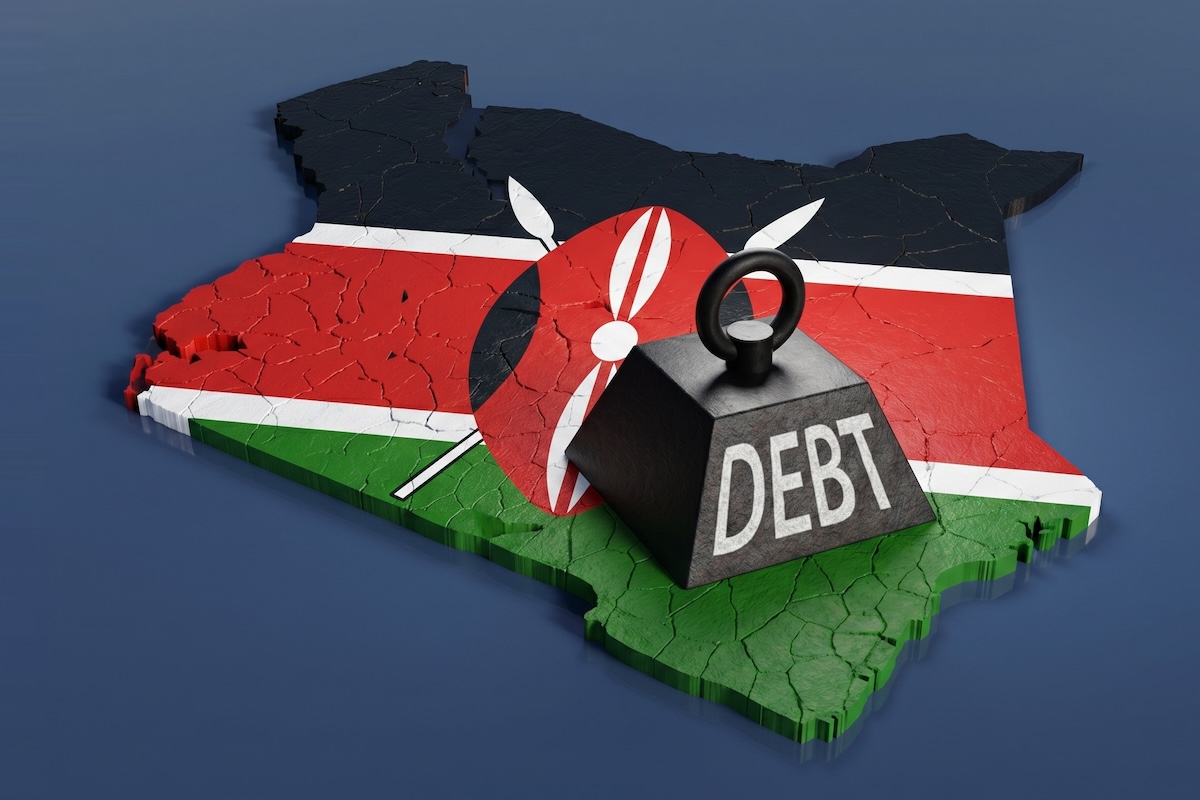

The odious debt doctrine holds that debts incurred by a government without the consent of its people, and not for the public good, are not enforceable against the state, particularly when creditors were aware of those circumstances at the time of lending. The Omtatah petition grounds this doctrine within Kenya’s 2010 Constitution: Articles 206, 211, and 228 govern the prudent use of public resources, while the Public Finance Management Act requires that loans fund development, be approved by Parliament, and flow through the Consolidated Fund. The petitioners argue these provisions were systematically violated, with Eurobond proceeds deposited in offshore accounts at JP Morgan Chase and Citibank New York, a direct breach of Article 206(1).
The specific allegations directed at the IMF concern an “on-lent loan” hidden beneath disbursements from the Fund’s General Resource Account under Special Drawing Rights, rolled over without parliamentary disclosure at KES 10 billion annually for two financial years, and forward-budgeted for three further years, aggregating to KES 50 billion in hidden, unauthorized exposure. The petitioners seek a declaration that the IMF can be held legally accountable in Kenyan courts for lending in contravention of national law.
The language in and around the petition has not been restrained. Petitioners have described the accumulated debt as instruments of “economic terrorism”, a charge that frames the borrowing not as mismanagement but as deliberate violence against the Kenyan people’s economic future. With 86 percent of tax revenue in the 2024/2025 financial year budgeted for debt repayment, the charge is not merely rhetorical.
In a remarkable signal of the petition’s constitutional weight, the Central Bank of Kenya formally filed in June 2025, endorsing the petitioners’ position that Kenya’s debt structure raises substantial constitutional questions. That a state institution aligned with the petitioners against the Executive is itself an extraordinary moment in Kenyan legal history.
The Ruling of June 25, 2026: What the Court Decided
On June 25, 2026, a three-judge bench comprising Justices Francis Gikonyo, Moses Ado, and Roselyne Aburili delivered their ruling on the preliminary applications, including the IMF’s bid to be struck from the proceedings. In a statement issued that same day, Senator Omtatah described the outcome with precision:
“The Court upheld the IMF’s claim of diplomatic immunity and struck it out of this petition. While we respect the Court’s decision, accountability for Kenya’s debt burden cannot end there. We are preparing a separate legal challenge to the Bretton Woods Agreements Act, 1963, against the Constitution of Kenya 2010 to ensure all actors involved in Kenya’s debt processes are subjected to proper scrutiny. Most importantly, the Court rejected attempts by the Attorney General and other respondents to have this case dismissed. The judges ruled that our petition will proceed to a full hearing on its merits. The Court also dismissed applications by the former Auditor General, former Controller of Budget, the current Auditor General, and the current Controller of Budget seeking to shield themselves from these proceedings.”
— Senator Okiya Omtatah, Press Statement, 25 June 2026
This is the ruling’s full shape. The IMF secured its exit; the case survives. The bench rejected the Attorney General’s argument that the matter was premature pending a special audit, dismissed the bids by the Auditor General and Controller of Budget, both past and present, to extricate themselves from the proceedings, and ordered the petition amended and returned on July 22, 2026, for a full hearing on the merits. The legal fight over who borrowed, how, and for whose benefit is still very much alive.


File photo. The World Bank and the IMF have mostly been seen as working in favour of the western world at the expense of the global south. Will the New Development Bank allow developing nations to finally be free of the influence of Bretton Woods institutions?
The IMF’s successful immunity plea rested on the 1963 Bretton Woods Agreements Act, the host-country privileges-and-immunities framework Kenya signed at the dawn of independence, giving domestic effect to Article IX, Section 3 of the IMF’s own Articles of Agreement, which grants the Fund immunity from every form of judicial process except where it expressly waives that immunity. Under Article 2(6) of Kenya’s 2010 Constitution, ratified international treaties form part of domestic law; the court found itself legally barred from compelling the IMF to participate regardless of the substantive allegations against it.
The IMF was given immunity by a treaty signed in 1963 — when Kenya had been independent for less than three months. That is the legal architecture now being used to insulate a global lender from accountability to the people whose debt it structured.
Omtatah’s response is significant and strategically sharp: rather than accepting this defeat, his team is preparing a direct constitutional challenge to the Bretton Woods Agreements Act itself, arguing that its immunity provisions are incompatible with the 2010 Constitution’s rights framework and principles of accountability and transparency. If that challenge succeeds, the legal basis for the IMF’s immunity in Kenyan courts collapses entirely. It would be, in effect, the Kenyan equivalent of the Jam v. IFC argument, not through the commercial-activities exception, but through the supremacy of a modern constitutional rights framework over a colonial-era immunity compact.
Two Rulings, One Question: Who Is the Law For?
Read together, Jam v. IFC in 2019 and the Nairobi ruling of June 2026 reveal the jagged, uneven frontier of global financial accountability. In Washington, US courts found a path, however narrow, to hold a World Bank arm legally answerable to communities devastated by a commercial investment. In Nairobi, Kenyan courts found themselves legally barred from even hearing the claim against an institution accused of extending hidden loans that violated Kenya’s own constitution. The geography of accountability is not incidental: it maps almost perfectly onto the geography of global power.
The immunity frameworks that protect the IMF and World Bank were designed and ratified by the same states that control the voting majorities in those institutions. The United States alone holds effective veto power at the IMF. The legal architecture of immunity and the political architecture of governance are two faces of the same coin. When Omtatah names the IMF as respondent and invokes the odious debt doctrine, he is asserting a political philosophy: that the right to borrow on behalf of a people cannot be severed from the accountability owed to that people, and that institutions which profit from illegal lending cannot permanently hide behind treaties their own members wrote, and which newly independent nations signed with almost no leverage to negotiate differently.
The Cavanagh and Mander framing from 2003 remains devastatingly apt. Their image of the IMF and World Bank as a fireman “pouring gasoline on a burning house to stop the blaze” described the perverse incentive structure of structural adjustment: the more a country struggled, the more it was offered loans on conditions that deepened the struggle. The Kenyan odious debt case adds a further charge: that the loans themselves were extended in knowing violation of constitutional borrowing constraints, and that the diplomatic immunity invoked in their defence was itself a relic of the same extractive colonial compact that structured African nations’ dependent relationship with Bretton Woods from the start.
There is a deeper resonance here that Jason Hickel’s framework helps name. The SAP era produced what he calls capitalogenic disease — systemic harm manufactured by capital logic rather than natural misfortune. The odious debt framework extends that analysis: the harm is not only in the spending cuts that follow the loan, but in the very act of lending unconstitutionally, routing proceeds through offshore accounts, hiding on-lent facilities beneath SDR disbursements. The debt itself is the pathogen. The immunity doctrine is the treatment-resistant membrane that protects it.
The End of Impunity Is Not Yet Written
The Omtatah petition remains alive and substantively intact. Its core claims, that KES 6.95 trillion in debt is constitutionally void, that former and current presidents bear personal liability under Article 226(5), that the PFMA amendments enabling the Kenyan Executive to bypass Senate oversight must be struck down, will be heard. The Law Society of Kenya, Katiba Institute, and Transparency International stand as interested parties. The case carries the potential to produce the first African judicial precedent on the enforceability of the odious debt doctrine: a principle long invoked in political advocacy but rarely tested in a courtroom.
And a second, potentially more explosive legal front has now opened: the constitutional challenge to the Bretton Woods Agreements Act, 1963, itself. If a Kenyan court rules that a colonial-era immunity compact is incompatible with the Bill of Rights and accountability principles of the 2010 Constitution, the legal basis for the IMF’s invulnerability in Kenyan courts evaporates. That would be a precedent with implications far beyond Kenya, for every African nation that signed similar frameworks at independence and has watched global lenders shelter behind them ever since.
As Jason Hickel’s analysis makes clear, the poverty of the Global South is an engineered inequality, long maintained by institutions that operated above the law. As Cavanagh and Mander documented twenty years ago, the debt trap was not a market accident but a designed instrument, one that turned emergency lending into permanent dependency. And as Omtatah’s petition now asserts before Kenya’s High Court, the Kenyan people did not consent to these debts, did not benefit from them, and are not bound to repay them.
The ongoing efforts to dismantle immunity represent more than a legal technicality. They are a critical step toward democratizing the global economy and ensuring that the architects of international development are finally held accountable to the people they claim to serve. Kenya’s odious debt case, even with the IMF struck from its margins, keeps that demand alive, and has now placed a constitutional challenge to the 1963 immunity compact directly on the docket. The next date is July 22, 2026. The question is whether the law will eventually catch up to the accountability the world already knows is overdue.
Sources: Jason Hickel, The Divide (2017); John Cavanagh & Jerry Mander, “World Bank, IMF turned poor Third World nations into loan addicts,” CCPA Monitor, July/August 2003; Jam v. IFC, 586 U.S. 199 (2019); HCCHRPET E216 of 2025 (Omtatah & others v. Kenyatta, Ruto & others); Senator Okiya Omtatah, Press Statement on the Public Debt Case Ruling, 25 June 2026; The Standard (Nairobi), 25 June 2026; Elijah Ntongai, “IMF Gets Diplomatic Immunity in Ongoing Kenya’s Odious Public Debt Case,” Tuko.co.ke, 26 June 2026; Afronomicslaw Sovereign Debt News Update No. 136.
Follow This Is Africa on Twitter and Facebook to join the conversation.