
World
Angelique Kidjo: the diva from Benin could win a record sixth Grammy Award
Angelique Kidjo has a remarkable cultural vision that spans the globe but stays true to her roots.


Sanya Osha, University of Cape Town
Angelique Kidjo, the energetic singer-songwriter and activist from the Republic of Benin, represents a rare African phenomenon.
In many respects, she belongs to the illustrious musical lineage of “Mama Africas” – the likes of South Africa’s Miriam Makeba, Letta Mbulu and Yvonne Chaka Chaka, Cape Verde’s Cesaria Evora and Mali’s Oumou Sangare.
These powerful maternal personages are distinctive for their regal bearing, a grand sense of responsibility in sharing Africa’s cultural heritage, and protecting the dignity of the African woman. They may not always articulate this political and aesthetic worldview in so many words, but their carriage says it all.
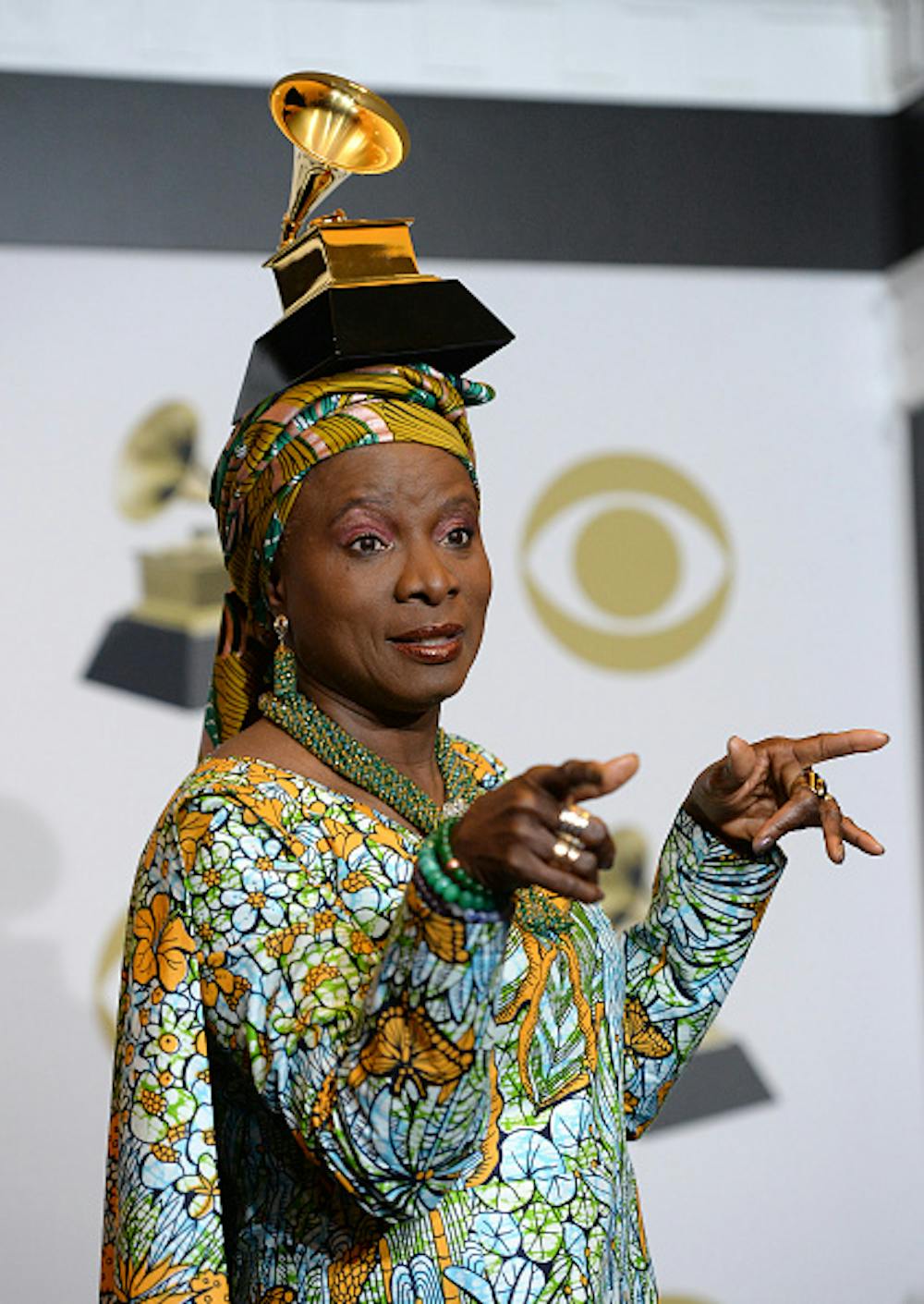
Mama Africas could be defined by the strength of their voices, their rich and colourful cultural pedigree and their duty to preserve what has been handed over to them through centuries of toil, conflict and creative resilience.
Kidjo’s fame continues to grow globally, particularly during Grammy season. Nominated for the Grammy Awards in the US 14 times since 1995, she lifted her first in 2008 and went on to win Best World Music Album in 2015, 2016, 2020 and 2022 (when the title changed to Best Global Music Album).
Her five Grammys match the record of South Africa’s isiZulu a capella outfit Ladysmith Black Mambazo.
Kidjo is up for more wins in 2023 for Best Global Music Album and also for Best Song Written for Visual Media for the movie The Woman King. Her album entry, a collaboration with French-Lebanese trumpeter Ibrahim Maalouf, is called Queen of Sheba.
Agolo
The 62-year-old West African pop star has jammed with music stars ranging from Quincy Jones and Buddy Guy to Mavis Staples and Chaka Khan. Her debut album Parakou was released in 1990, but it took her hit song Agolo for her to burst into global reckoning and galvanise the world’s dance floors in 1994.
In the Yoruba language “agolo” refers to the metaphysical significance of time, a cyclical phenomenon conjoining life with death – life being a gift that must be cherished and lived wisely. Agolo was a fervent wail of catharsis from the womb of Africa, bearing swathes of history, suffering and defiance. It shook souls and moved feet through its rhythmic sense of elation and release.
In the video there’s an androgynous energy about the artist with the closely cropped hair. A suggestion that she’s possessed by the indefatigable endurance of a real queen like