
Culture
Somalia: using the arts for peace and peace-building
Djibouti touts herself as the capitale culturelle and the eventful Fest’horn Festival has, without doubt, been one of the instruments that is used to claim the centrality of culture in national matters. “Fest’Horn Festival is a regional festival of music from the horn of Africa that was created with the intention of bringing attention to this part of Africa, often tarnished by wars, famines and other calamities. For six days this annual artistic meeting happens in the capital of Djibouti with artists from various African countries and the rest of the world. The event not only serves to promote the culture of Africa, but to provide a platform for the promotion of the values of peace and development.”

A few days after my editor asked me to think about this piece, I thought about a popular Somali comedian, the late Absi Jailani Malaq alias Marshale, who was shot and killed in Mogadishu a year or so ago by two pistol-wielding assailants. The journalists who rushed to the scene of the violence reported that the attack was carried out by unknown assailants, who appeared to have specifically targeted Marshale. He was shot in the chest and head outside his home in Waberi district in Mogadishu and was then rushed to Madina hospital but died after an hour of doctors trying to save his life. The killing of Marshalle, a top Somali artist, seemed to be part of an onslaught against professionals, especially in the arts in the troubled Horn of Africa country.
Indeed, one cannot also fail to see the incident as an attack on the broader creative industry considering that several other similar attacks have happened in Mogadishu and other parts of Somalia. The attack on Marshale came a few months after a grenade attack at a packed video showroom near Tarbunka square in Mogadishu in which four people were killed and nine others seriously injured.

Abdi Jeylani Marshale Famous Somali Comedian Marshale Shot Dead, Photo: Africanseer
The attackers hurled two hand grenades into a packed video showroom in which teenagers were watching films. Most of the victims were said to be teenagers from nearby Internally Displaced Persons’ camps who came to the place for entertainment. All these attacks on the arts and related institutions were executed by Somalia’s al Qaeda-linked Al Shabaab rebels, making it clear how they detest the arts.
A few months before the 2012 Olympic games opened in London, two top sports officials in Somalia were killed in a blast at Mogadishu’s national theatre in an attack by Islamist insurgents aimed at killing senior government figures. The theatre had been reopened for the first time in two decades on March 19 2012, raising hopes the country had turned a corner after being plagued by violence. While the two people killed were sports officials, it was not lost to observers that the choice of the theatre signified their desire to use culture, in its broadest sense, to preach peace.
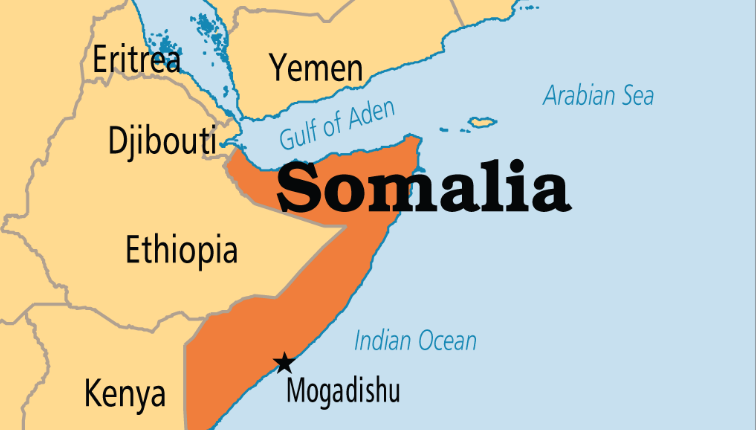
As I mulled over all these sad events, I couldn’t help thinking how the militants’ abhorrence of the arts and culture is far removed from the way the arts have been embraced by their brothers and sisters in Djibouti. The Somali Republic was created in 1960 by merging the protectorate of British Somaliland with the colony of Italian Somaliland. Despite these colonial boundaries, the Somali community spreads from what was previously described as the northern frontier in Kenya, Ogaden in eastern Ethiopia to Djibouti up north at the Horn of Africa coast.

Somali Natioanal Theatre blast, Photo: The London Evening Post
Djibouti is a former French Somali colony/province and while they share the same language and religion with the militants, they are diametrically apart with Djiboutians who proudly flaunt arts and culture. I found myself thinking about an earlier trip I had made to Djibouti.
Djibouti touts herself as the capitale culturelle and the eventful Fest’horn Festival has, without doubt, been one of the instruments that is used to drive this point home and claim the centrality of culture in national matters.
Fest’horn Festival
Fest’horn Festival is, mainly, a music festival that draws established and budding musicians from Djibouti and other African countries to celebrate peace. Countries at the horn of Africa have been beleaguered by prolonged armed conflicts that were set off by intolerance of one or the other aspect of a person or their culture.
Ethiopia and Eritrea were united as one state when they were fighting against the Haile Mengistu regime but when they toppled him, they turned their guns against on each other. Sudan also had a prolonged conflict that resulted in the creation of Southern Sudan. Even that has not silenced the guns. The war drums have also rung out in Rwanda, eastern Congo and Burundi. Djibouti, festival host, has its own share of history of armed conflict, which fact prompted them to initiate this festival.

Fest’Horn Festival, Photo: Music in Africa
Its promoters note: “Fest’Horn Festival is a regional festival of music from the horn of Africa that was created with the intention of bringing attention to this part of Africa, often tarnished by wars, famines and other calamities. For six days this annual artistic meeting happens in the capital of Djibouti with artists from various African countries and the rest of the world. The event not only serves to promote the culture of Africa, but to provide a platform for the promotion of the values of peace and development.”
It is here that I met K’Naan, a Somali then living in Canada, who was wildly cheered when he performed. Then he was little known (at least in many parts of Africa) but when Africa hosted the FIFA world cup extravaganza for the first time, K’Naan became a household name across Africa with his hit song Wavin’ Flag.
His lyrics, “Give me freedom, give me fire, give me reason, take me higher; See the champions, take the field now, you define us, make us feel proud,” and chorus “When I get older; I will be stronger; They’ll call me ‘Freedom’; just like a wavin’ flag………,”-were catchy and memorable. Several years after the world extravaganza, kids in playing fields around the continent are still chanting these words animatedly.
K’Naan electrified the entire continent with this song in the same way he thrilled the crowds in Djibouti. For the several hours that he was on stage, Djiboutians forgot about their worries, Somalis living in Djibouti forgot about the conflict back home as they enjoyed themselves and also paid homage to one of their own shining lights.

K’ Naan, Photo: Radio Canada International
Born Keinan Abdi Warsame in 1978, K’Naan is the grandson of Haji Mohamed, one of Somalia’s most famous poets; he is also a nephew of famed Somali singer Magool .”If you’re going to make music I think it should contribute in some way,” he said in an interview with Africa Success website. “It doesn’t have to change the world, it could just be a good melody. My experiences aren’t just mine, it’s just that I can articulate them in English, it is also about the lives of people who have suffered,” as he and his family have.
In Djibouti, where he told this story in English and Somali, he reminded the excited listeners that they can be agents of peace and positive change back home. His scintillating performance reminded Djibouti and others that Somalia, inspite of all the problems she was experiencing, has great men and women. The country has a great history and people committed to a great future.
As I thought about K’Naan in Djibouti, I wondered if he could have survived as an artist in his homeland. A self taught artist, his determination would have seen him practice his art but the risks would be similar to those that menaced the comedian Marshale. In his most famous song Nagala soo baxa “Come out with it,” K’Naan directly challenged the Somali warlords: “Come out of my country; You’ve spilled enough blood; You’ve killed too many people; You’ve caused a ton of trouble.”

K’naan , Photo: Billboard
In another song K’naan expresses his outrage against the brutalities of the warmongers: “See they rack bodies not grain; Chop limbs not trees; Spend lives not wealth; Seek vengeance not truth; Moisten pain not plants; Sharpen feuds not minds.” These songs would definitely not have won him any favours. Perhaps some young men armed with pistols or with hand held grenades would have been sent his way.
The Cultural Grain
The arts, and particularly poetry, have been a way of life in the Somali community which spreads from northern Kenya, Ogaden in eastern Ethiopia, Djibouti and into the diaspora in Europe, America, Australia etc. Richard Burton, an early 19th-century English explorer, famously described Somalis as a “nation of poets,” an assertion echoed by other scholars.
In a 1969 coup, Siyaad Barre took control of Somalia and declared it a socialist state. Military misadventure into Ethiopia over the Ogaden area and corruption led to resentment of his regime. Soon clan wars erupted, resulting in his toppling in 1991. However, the clan-based militias that overthrew Barre descended into infighting and lawlessness, triggering famine and a massive refugee problem.
Repeated attempts at peace and political transition failed during the 1990s and early 2000s. In 2004, an interim Transitional Federal Government (TFG) led by President Abdullahi Yusuf was formed but this did not lead to normalcy. The TFG paved way to the current Federal Government of Somalia (FGS) but it is still beleaguered by war.

Former Somalia President Abdullahi Yusuf. Photo: VAO News
The search for long lasting peace in Somalia persists. The voices of the proponents of using arts in this search for peace and prosperity have also not gone silent. Somalia’s own son, Maxamed Daahir Afrax, a writer and literary scholar based in the UK, underscored the importance of poetry in a paper, Towards a Culture of Peace, presented at a gathering at the Conciliation Resources, an independent organisation working with people in conflict to prevent violence and build peace.
In the entire presentation, he was unequivocal that poetry has traditionally been the principal medium through which Somalis define their identity, record their history, express their innermost feelings and communicate their views.
He added: “Poetry has been the basis on which other forms of oral cultural expression have developed, such as Somali theatre which emerged in post-independence Somalia as an important art form in Somali urban life. Somali theatre, which incorporates drama, music, dance, visual arts and short-lined modern poetry, became the main medium of expression for a