
Arts, Culture and Sport
Thomas Mapfumo hurts. For many reasons #Zimbabwe
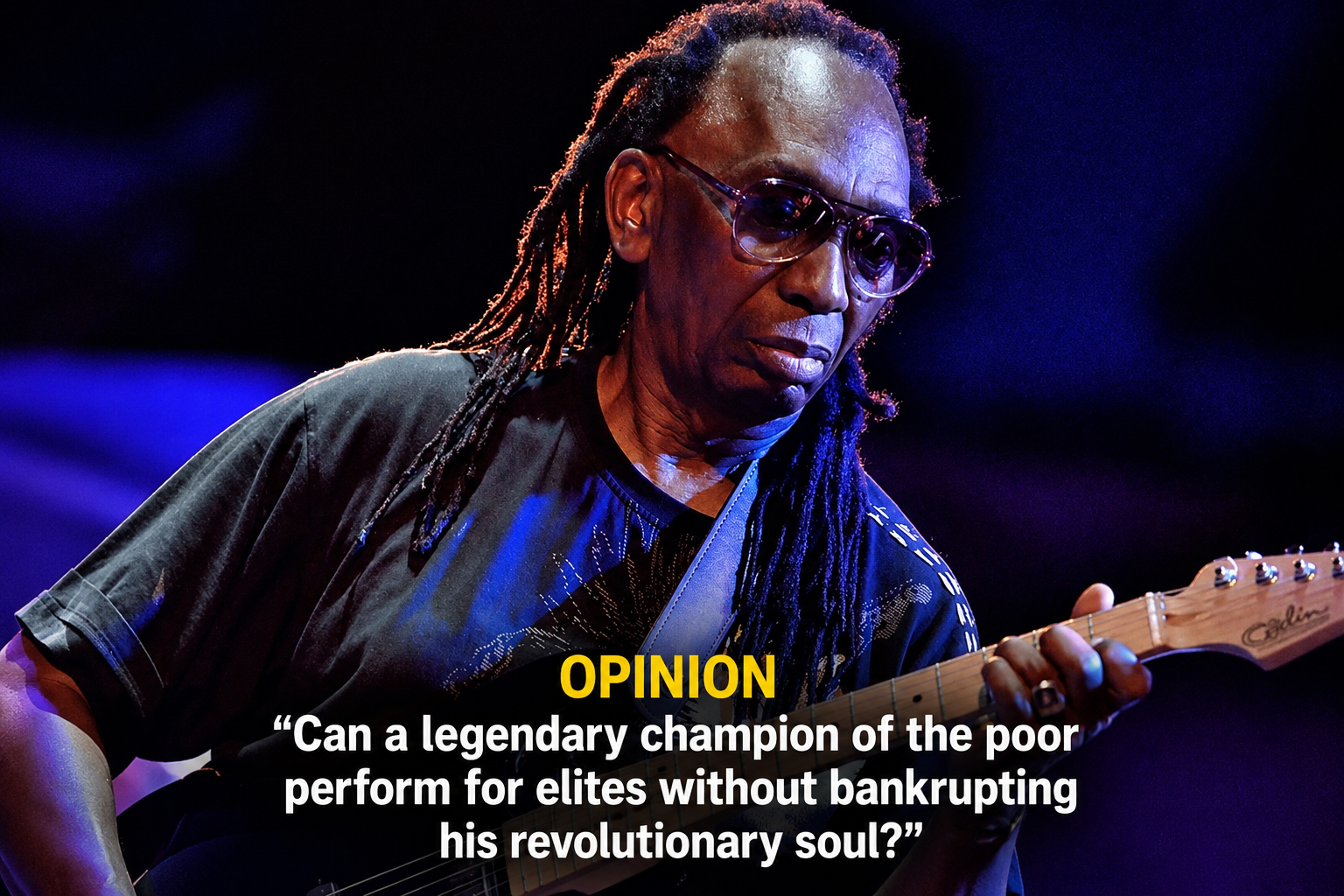
From childhood nostalgia to writing sleeve notes in exile, Takura Zhangazha’s devotion to Thomas Mapfumo faces its ultimate test. As the Chimurenga icon plans a controversial 2026 return to Zimbabwe funded by the ultra-rich, Mukanya’s legacy hangs in the balance. Can a legendary champion of the poor perform for elites without bankrupting his revolutionary soul?

My late father first introduced my sisters, brother and I to a song called ‘Mugarandega’ in the late 1980s.
It was on vinyl record player (if thats what they are still called).
If I remember correctly it had a reggae rhythm to it.
We did not know that it was a song also related to the liberation struggle for Zimbabwe’s independence until we watched the visuals on a black and white television via the then Zimbabwe Broadcasting Coorporation (ZBC).
Or opened the colour cover of the long playing record (LPR) to see Thomas Mapfumo emaculately dressed in what was a suit and bowler hat, looking at images that related to lost comrades in the liberation struggle war.
The song was a regular also on what was a popular music programme called at that time ZBC’s Radio 2 and the television ‘Mvengemvenge.’
Dressed in the same above described attire Thomas Mapfumo would be seen opining about how he lost relatives in the war. Ones he did not know where they were because they never came back! Even in spirit.
My father, who played the cassette song during the week would generally tell us to keep quiet as the song played.
Though on weekends, he would put it on the vinyl player and make us dance to it to the reggae chants of the late, amazing Tobias Ariketa. (He’s a true man Africa!)
All we knew in our late primary school years was that you either had to dance to Leonard Dembo’s “Chitekete” or Mapfumo’s “Mugarandenga“.
We did both depending on the rice, chicken on offer. Especially in Section 2 of what I still consider my most most amazing childhood memory surburb of Kambuzuma!
I did not know who Thomas Mapfumo was at that time. And the iconic tag he had.
I just knew that my father liked his (Mapfumo) music and made us dance to it especially after imbibing a glass of my namesake opaque beer ”Takura 5″ from Chibuku breweries which is still run/produced by, I think, Delta Cooperation.
My father passed away in the early 1990s and his record player also eventually died with him.

We sort of forgot his passion for Thomas Mapfumo and Chimurenga music. At least for me until I got to the University of Zimbabwe in the late 1990s.
There I met an amazing, courageous student activist called Maxwell Saungweme who hauled me back to grassroots realism. Together with my former high-school mates who I cannot mention without their permission because of where they work now.
They re-introduced me to Thomas Mapfumo via his still amazing album Chimurenga Explosion!
By the time we left university I was a clear Mapfumo afficionado (fan).
Even my elder brothers would agree to take me to his (Mapfumo’s) shows on their happier weekends as they got married and so on.
Ridiculous as it may seem is the fact that I first part personally encountered mdara Thomas via his then replication manager Cuthbert Chiromo, who is an elder brother to me and was in the same high school class as my elder brother in 1994.
By the year 2000, at the height of opposition politics and in 2002 at that legendary Boka auction floor show we had built enough of a rapour to link up with ‘blah Cathaz’ as we called him at that time. Mukanya akavarisa! You can ask the equally amazing former journalist Luke Tamborinyoka!
After that I went off to Edinburgh university in Scotland and lo and behold Bla Cathaz had organised a Mapfumo show in the European summer of the next year (2003).
Bla Cathaz was not there but I managed to sneek in a few words to mdara Tomimbi of appreciation because tanga ‘tirinyika dziri kure’.
This was circa 2003.
Fast forward to 2010 and when bla Cathaz is still mdara’s manager, he asks, while I am holed up in France, if I can do the cover write up for Mukanya’s next album. I was shocked but happy to proceed as instructed.
While waiting for the infamous European volcanic cloud cover to clear up that year I had to write the backdrop for the album ‘Exile’. I was stuck in Paris so I got down to it. And Mukanya and bla Cathaz approved!
By the time the album was published I was a mini-celebrity!
After that mdara Tomimbi came back for two amazing shows in Zimbabwe from exile.
But even before these there were other sad developments that happened. We lost cdes in the Chimurenga movement. And later after that we also lost bla Lancelot.
What is however significant for this article that I may get crucified for, is Thomas Mapfumo’s newfound decision, as reported by mainstream and social media, to come back and perform at home at the behest of Wicknell Chivayo in 2026.
From a champion of the poor to a champion of the rich!
As afficionado fans we are divided on the meaning of this decision.
It is however his decision. And his alone as he owns his own music. (I have no idea about his copyright issues)
Mapfumo retains the absolute right to license his catalog, perform for whomever he chooses, and seek financial security. Yet, as the narrative sharply illustrates, there is a distinct moral boundary between owning copyright and owning a legacy.
He does not however own his legacy. It belongs not only to his fans but to posterity and future generations. Rich, poor or inbetween.
If he eventually, as he has publicly said he will do, comes and performs for rich but limitedly talented younger cdes such as Jah Prayzah or Wicknell, he will have let his own legacy down. For cash money.
But as he himself sang, ‘hapana munhu anomanikidzwa kuita zvaasingade’. There is no one who should be forced to do what they do not want to do.
Asi huya uzowona zvinoita ngoma… inodaidza vakaenda kare…
Ini ndapedza… handina mazwi akawanda
This article was first published by Takura Zhangazha and it is published here with permission of the writer.
*Takura Zhangazha writes here in his personal capacity
Follow This Is Africa on Twitter and Facebook to join the conversation.


