
Politics and Society
‘Chained like prisoners’: Plight of Somaliland mental health patients
Human Rights Watch has released a report documenting the abuse, beatings and involuntary treatment of people with psychosocial disabilities in Somaliland’s private and public health centres

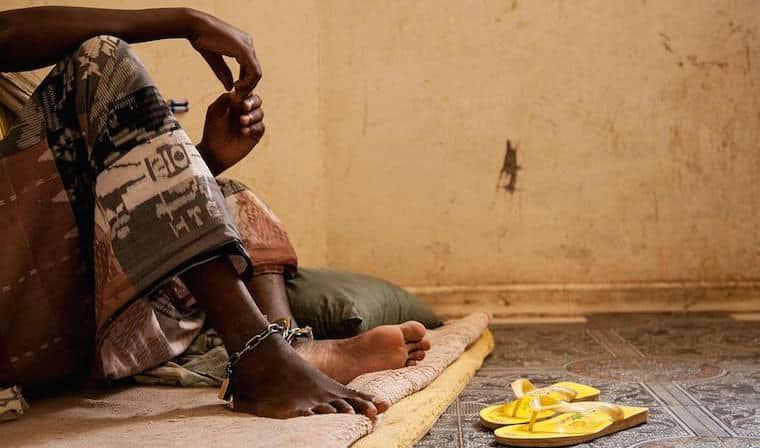
Mental health patients often face extreme stigma and abuse and the latest report from rights group, Human Rights Watch (HRW) on the state of mental health patients exposes the shocking state of affairs in Somaliland.
HRW released a damning 81-page report, ‘Chained Like Prisoners’: Abuses Against People with Psychosocial Disabilities in Somaliland,” which documents how people with mental health conditions in the country are increasingly forced into institutions, where they face serious abuses and poor conditions.
The patients are often chained and physically abused. According to the report, “men with perceived or actual psychosocial disabilities face abusive restraints, beatings, involuntary treatment, and overcrowding in private and public health centers. Most are held against their will and have no possibility of challenging their detention”.

A patient sleeps with his feet chained together at the Raywan private centre in the Somaliland capital Hargeisa Photo: Zoe Flood for Human Rights Watch
The rights of people with pyschosocial disabilities are often trampled upon and patients are often held at “prison-like” centres, where they are isolated, Laetitia Bader, Africa researcher at HRW said.
HRW urged the Somaliland authorities to “act quickly to address the abuses inside mental health institutions”.
The abuse of mental health patients is a growing problem in some African countries. Only last year, HRW released a report documenting the abuse of patients in Ghana and advised the country’s “newly formed Mental Health Authority [to] closely monitor all mental health facilities to end the widespread mistreatment of people with mental disabilities”.
In another case highlighting the plight of vulnerable citizens, HRW reported that the Rwandan government was arbitrarily rounding up “undesirables”, including “beggars and prostitutes, and holding them in a grim detention centre to promote the capital’s clean image.
Source: Human Rights Watch


