
Africans rising
The colonial currency has an exit door
Bitcoin, the CFA franc, and the monetary chapter of African decolonisation.

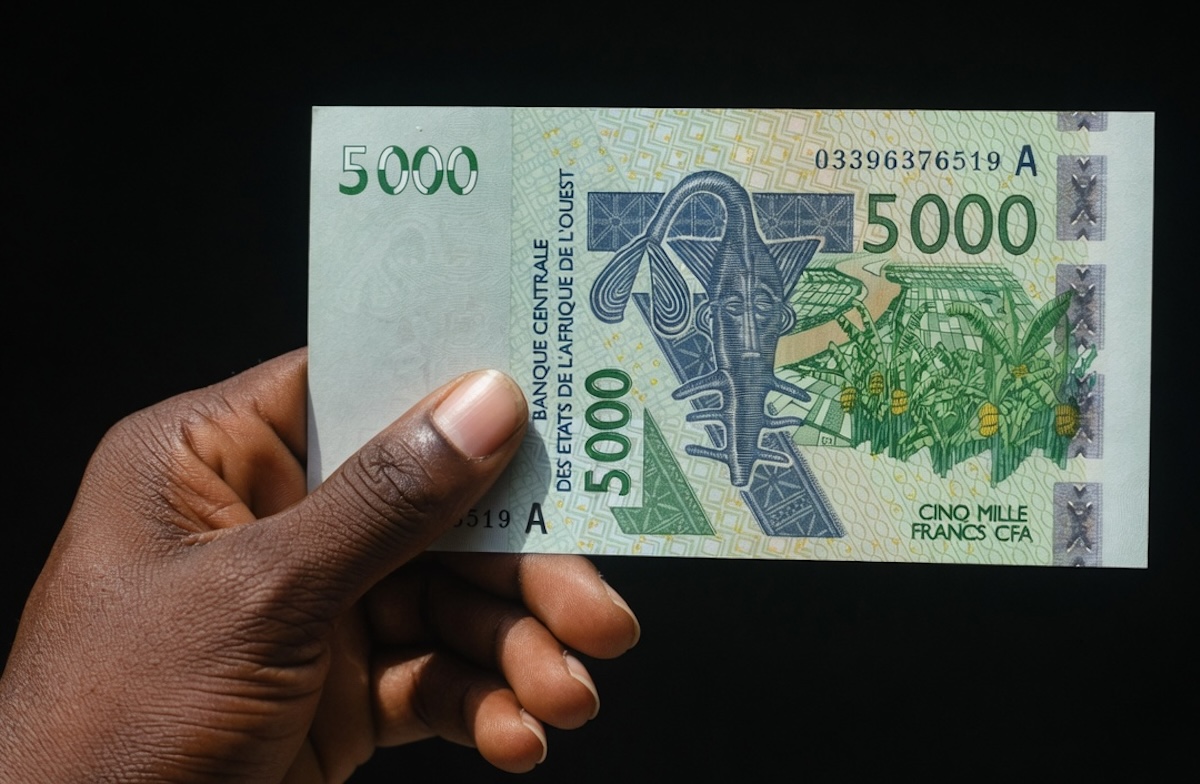
Every CFA franc note in circulation was printed in Chamalières, France, at a factory operated by the Banque de France. In 2026, 210 million Africans across 14 countries earn, save, and transact in a currency whose physical production happens on another continent, whose monetary policy is shaped in Frankfurt and Paris, and whose convertibility is guaranteed by the French Treasury.
The flag-raising was incomplete. The monetary chapter of decolonisation was never written.
The CFA franc was created in 1945 as the “Colonies Françaises d’Afrique (French colonies in Africa)” franc. The name was later softened for diplomatic purposes. The mechanics were not. Eighty years later, the currency is still pegged to the euro at a fixed rate, still guaranteed by France, and still organised around a system that historically required African central banks to deposit a portion of their foreign reserves with the French Treasury. In 1994, Paris and the IMF devalued the CFA by 50 percent. West Africans woke up one morning to find that the value of their savings had been cut in half. It was not a market event. It was a decision, made elsewhere, about them.
The proposed replacement, the ECO, is currently scheduled for a 2027 launch. On paper, it is a symbol of regional monetary independence. In practice, the draft architecture keeps the euro peg, keeps a French financial guarantee in the background, and relocates the safety-net obligation from Paris to the IMF. The headquarters changes. The leash does not.
Bitcoin is not a saviour. It does not rescue any country from inflation, bad policy, or corruption. But it offers a monetary exit that does not require the permission of the state
Into this eighty-year arrangement, something new has arrived: an asset that no treasury on any continent can print, devalue, or freeze. Bitcoin is not a saviour. It does not rescue any country from inflation, bad policy, or corruption. But it offers something the CFA zone has never had. It offers a monetary exit that does not require the permission of the state.
That matters. Consider what it means practically. A Senegalese shopkeeper who saves for ten years in CFA francs is trusting that Paris will not devalue again. A Cameroonian trader who ships goods between countries in the zone depends on a convertibility system she cannot influence. A Burkinabè activist who criticises the arrangement does so inside a financial system whose final underwriter is the former coloniser. Bitcoin changes the balance of each of these relationships. Savings become less seizable. Cross-border trade becomes less dependent on correspondent banking routed through European capitals. Political expression becomes less financially punishable.

This is why anti-CFA sentiment and bitcoin adoption have begun to travel together across Francophone Africa. In April 2025, Bitcoiners from across the French-speaking world converged in Douala, Cameroon, for the first Conférence Bitcoin Afrique, a Bitcoin-only gathering built around the insight that most bitcoin education had been locked behind English and needed a Francophone home. Alongside it, the continental Africa Bitcoin Conference, now in its fourth year, has become the broader pan-African stage. Leaders like Ibrahim Traoré in Burkina Faso and Assimi Goïta in Mali have made monetary independence part of their political vocabulary. Whether their own regimes deliver on that vocabulary is a separate question that history will judge. What is undeniable is that the demand for an exit has become a mass demand, from the street up.
Bitcoin is volatile. Custody is technically demanding. Without electricity, or connectivity, or basic education, it can quietly become another technology that serves the already-empowered
Amílcar Cabral warned us: tell no lies, claim no easy victories. Bitcoin is volatile. Custody is technically demanding. Without electricity, or connectivity, or basic education, it can quietly become another technology that serves the already-empowered. These are real limits. The honest Utu/Ubuntu position is not to sell bitcoin as salvation, but to understand it as an instrument. One tool in a longer decolonial project that also includes local manufacturing, food sovereignty, regional trade integration, and the hard, unglamorous work of building disciplined African institutions that our own grandchildren will trust.
But an instrument is exactly what a captive people need. For the first time since 1945, Africans inside the CFA zone can hold a monetary asset that neither Paris nor Bamako can debase. They can send value to their families across borders without paying a tax to a French-backed clearinghouse. They can opt out of a system that was never designed for them, without waiting for a political revolution to make the opt-out legal.
The decolonisation project has a monetary chapter. It is being written right now, one wallet at a time, by millions of ordinary people who are tired of asking permission for their own money.
Follow This Is Africa on Twitter and Facebook to join the conversation.


