
Politics and Society
Mark Carney and the new power calculation, where does Africa stand?
Mark Carney’s Davos speech won Western applause as bold truth: the global order has ruptured. Yet the Global South has shouted the same critique for decades—only to be ignored or punished. The real divide? Whose voice gets the standing ovation. The applause reveals not a breakthrough in global thinking, but the persistence of a deeply unequal system of voice, legitimacy, and power.

By Hardi Yakubu and Mawuli Kuwornu
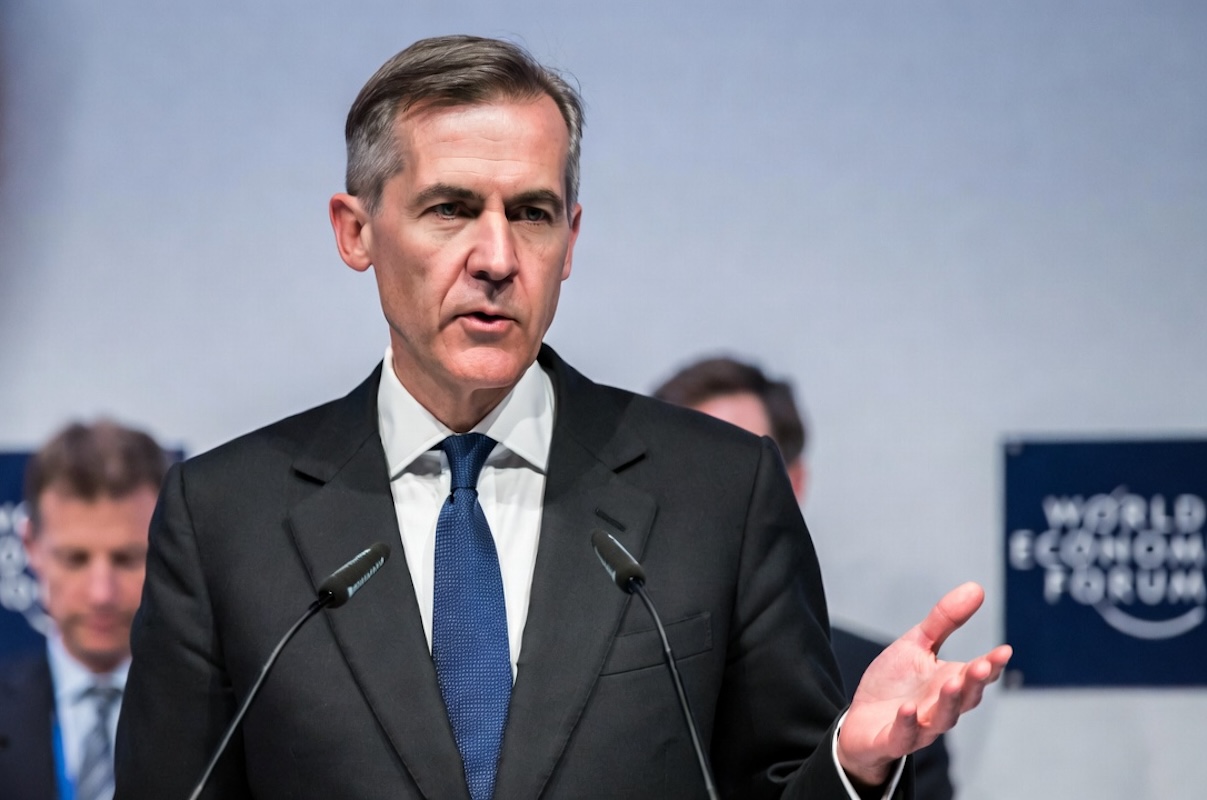
Canadian Prime Minister Mark Carney’s speech at this year’s World Economic Forum in Davos was widely interpreted as a moment of rare courage – a Western leader finally speaking honestly about the breakdown of the global order. Carney decried what he called a rupture. “Let me be direct: We are in the midst of a rupture, not a transition. Over the past two decades, a series of crises in finance, health, energy and geopolitics have laid bare the risks of extreme global integration. But more recently, great powers have begun using economic integration as weapons. Tariffs as leverage. Financial infrastructure as coercion. Supply chains as vulnerabilities to be exploited”, he said.
Carney’s speech received much applause and was one of the main highlights of the 2026 forum. What is less highlighted however is the “order” that is breaking down. From a Pan-African perspective, the applause tells a different story. It reveals not a breakthrough in global thinking, but the persistence of a deeply unequal system of voice, legitimacy, and power.
Carney’s speech was not brave. It was late. And the praise it received says far more about who is allowed to name global injustice than about the novelty or boldness of the ideas themselves.
Nothing new
At the core of Carney’s argument is the claim that the international system is unbalanced, coercive, and selectively rules based. “We knew the story of the international rules-based order was partially false. That the strongest would exempt themselves when convenient. That trade rules were enforced asymmetrically. And we knew that international law applied with varying rigour depending on the identity of the accused or the victim”, Carney opined.
Ironically, this has been the lived reality – and the intellectual position – of the Global Majority for decades. African, Asian, and Latin American leaders and intellectuals have long argued that global trade rules are rigged, that international finance disciplines the poor while protecting the powerful, and that “rules-based order” often means rules applied unevenly. These critiques were articulated by Pan-African thinkers such as Kwame Nkrumah, Dependency theorists, activists and anti-imperialist academics demonstrated how wealth systematically flows from poorer “peripheral” states to richer “core” states, locking the former into structural underdevelopment rather than enabling convergence. Nkrumah’s 1965 book Neo-Colonialism: the Last Stage of Imperialism exposed how political independence often masked continued external control over African economies and states. It revealed how the former colonialists were using so-called international trade rules, the media and entertainment, cultural, academic and intellectual domination to continue to exploit and control the resources of the formerly colonized.
These ideas were not marginal; they were formalized politically through the Non-Aligned Movement, which brought together newly independent states seeking to resist domination by global power blocs and to assert autonomy within an unequal international system and repeatedly in the halls of the United Nations.
When any country dares to break free from the stranglehold of a patently unbalance global system, it is punished with sanctions, violence or political instability
Yet when these arguments come from the South, they are either dismissed or ignored. Worse, when any country dares to break free from the stranglehold of a patently unbalance global system, it is punished with sanctions, violence or political instability.
The applause for Carney therefore confirms a familiar imbalance: the same analysis becomes respectable only when voiced by a Western leader, in a Western forum, to a Western audience. It is hardly progress. On the contrary, it shows the system is structured to amplify the voices of Carney and those who look like him.
Complicity
Carney openly acknowledged that his country has participated in upholding the very system he now criticizes. He said,
“For decades, countries like Canada prospered under what we called the rules-based international order. We joined its institutions, we praised its principles, we benefited from its predictability. And because of that we could pursue values-based foreign policies under its protection.
We knew the story of the international rules-based order was partially false. That the strongest would exempt themselves when convenient. That trade rules were enforced asymmetrically. And we knew that international law applied with varying rigour depending on the identity of the accused or the victim.”
This admission has been praised as candour. But it is really an indictment. For decades, so-called “middle powers” helped sustain – and knowingly benefited from – an international architecture that systematically disadvantaged post-colonial states – through skewed voting rights in global financial institutions, unequal trade regimes, debt systems that extract more than they invest, and climate frameworks that externalize costs onto the poorest.
If these states understood the system to be unjust – as Carney now admits – then what does he call their participation in it? They benefited from the system when it worked in their favour and question it only now that it shows signs of turning against them.
For us in Africa and the “Global Majority” generally, this is yet another reminder that the international system has never been governed by principles but by interest. And Global Minority societies have no moral high ground. What else are we to make of this than that their positions on matters of human rights, rule of law, rules-based order has always been a ruse? For evidence, look to Iraq, Libya, Palestine, Venezuela, Iran etc.

Libya Map. Photo: Operation World
The Myth of the ‘Middle Powers’
Carney places great faith in “middle powers” such as Canada as the architects of a new global equilibrium. From our perspective, this category looks increasingly hollow. These states are not autonomous centers of power. Their economic, military, and diplomatic orientations remain tightly aligned with the United States. When Washington weaponizes trade, finance, or sanctions, most “middle powers” comply. When international law is violated by powerful allies, they equivocate. Power is not defined by eloquence but by independence of action. By that standard, most middle powers are merely managers of the existing order taking instructions from the power centers they are being called to challenge. Presenting these so-called middle powers as the nucleus of global renewal is at best a mis-diagnosis.
Reforming the World without the majority
Perhaps the most revealing limitation of Carney’s speech is who it excludes. His call for partnership is directed almost entirely at other Global North countries, with China appearing primarily as one they must deal with as they have no choice. Africa, Latin America, South Asia, and much of Southeast Asia, the regions that contain the majority of the world’s population and bear the greatest costs of global instability are largely absent as agents.
Rather than a minor oversight, this reveals the boundaries of Carney’s imagination. Recalibrating the global system without centering the majority world is not genuine reform. His idea is to create a new center of power that can guarantee his country and those he deems partners access and control over resources belonging to people in the majority world, those that he explicitly excludes from his calculus of new power.
African Unity as a strategic imperative
If this moment teaches Africa anything, it is a hard but necessary lesson which is hardly new: power only respects power. Carney’s “new system” via middle-power coalitions echoes what a united Africa can achieve against coercion. Appeals to fairness, eloquent diagnoses, and polite participation in international forums have never produced equilibrium in the international system. What has shaped outcomes is counter-veiling power. When we talk about Borderless Africa, this is what we mean. That African unity is our path to power that can create the needed balance to not only prevent ourselves from being yet again the victims of imperial recalibration, but as a necessity for world peace. In a world consolidating into blocs, our fragmentation will remain our vulnerability. A united Africa is a strong Africa.

Photo credit @AmbMuchanga/Twitter. Commissioner for Trade and Industry African Union Commission
The African Continental Free Trade Area (AfCFTA) is one of the way to operationalize this, creating a single market for 1.4 billion people to boost intra-African trade (currently at a measly 16%), enhance competitiveness, develop value chains, and build collective leverage in global talks. However, in the context of what we are witnessing, free trade area alone is insufficient without unified political directions anchored on Ubuntu and self-reliance. A united Africa gains greater negotiating power in whatever new structures will emerge from the turmoil.
A united Africa working closely with Latin America, Asia, and other Southern formations can constitute a genuine counter-balance in the international system. This means coordinating positions in multilateral institutions, aligning responses to debt and sanctions, expanding South–South trade and finance, and investing collectively in industrial and technological capacity.
We must not allow a recalibration of the world to result in merely replacing one hegemon with another. Deeper South-South ties is about restoring equilibrium. History shows that balance emerges not from goodwill, but when no bloc can impose its will without consequence.
Where do we go from here?
Africa must move quickly to unite starting with operationalizing free movement of persons, goods and services; issue the African passport, and create a single powerful united African state. This powerful state will not only be our insurance against recolonization, but also our path to prosperity. If we fail to seize this moment and do what is necessary and urgent, then we will have ourselves to blame for what comes next.
Hardi Yakubu is the Movement Coordinator of Africans Rising. Mawuli Kuwornu is Research Assistant at Africans Rising.
Follow This Is Africa on Twitter and Facebook to join the conversation.


