
Politics and Society
10 Pictures of Patrice Lumumba
Today we remember Patrice Émery Lumumba, a remarkable African nationalist, and look at some important moments in Lumumba’s life captured on camera.

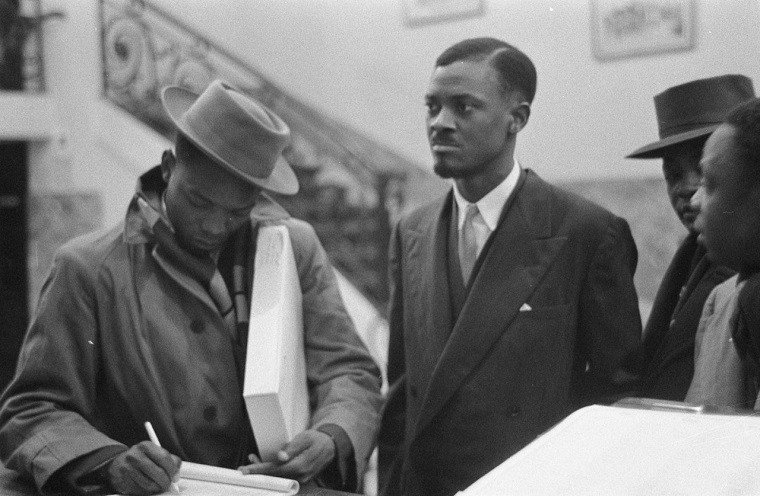
A Pan-Africanist and iconic revolutionary, Patrice Lumumba, founder and leader of the Mouvement National Congolais (MNC) party was Congo’s independence leader and the first democratically elected leader of the country.
Lumumba was born into the Tetela Tribe on 2 July 1925 in Onalua, Belgian Congo. He was raised in a Roman Catholic family and attended missionary school, and the government post office training school.
He dedicated his life to fighting colonialism, exploitation and injustices. Lumumba played a critical role in Congo’s fight for independence from Belgium.
At 34, Lumumba became the first Prime Minister of the Democratic Republic of Congo, and he was critical of Belgian involvement in Congolese politics. His administration faced a serious breakdown of order. There were a series of significant threats, which destabilised the government, and these included a military revolt and secession crisis, and these among others subsequently led to the demise of Lumumba.
As the political crisis spiralled out of control, Lumumba was imprisoned and he was later executed in a complex plot that is said to have involved Belgian, British and American collusion.
Lumumba was executed on 17 January 1961 by firing squad, and the execution caused an international outrage.
We celebrate Lumumba’s enduring great legacy.

A picture dated November 1960 shows Patrice Lumumba (R), Congolese Prime Minister, and Okito (L), Senate President, under the survey of Moise Tschombe’ s army guards, upon their arrest in Leopoldville. Belgium has a ‘moral responsibility’ for the death in 1961 of Patrice Lumumba, a parliamentary commission of inquiry concluded in a report published 16 November 2001. Photo: ANP/AFP/EPA

Patrice Lumumba, photo dated October, 1959. Photo: ANP

Patrice Lumumba, President of the council of the Republic of Congo, leaves the Idlewild airport in New York 24 July 1960, escorted by American policemen. Photo: ANP

A picture dated 1960 showing Patrice Lumumba in Leopoldville, which later became Kinshasa. Leader of the Congolese national movement, Lumumba became the first Prime Minister (1960) of former Belgian Congo, renamed Zaire in 1971 and now Democratic Republic of Congo (DRC). Arrested in November 1960 and deposed, he was assassinated in January 1961. Photo: ANP

Patrice Lumumba, Prime Minister of the new and troubled state of Congo, pictured on arrival at London Airport tonight from Accra en route to New York. Picture dated July, 23, 1960. Photo: ANP

Lumumba salutes the photographers as he leaves the Idlewild airport 02 August 1960, to go to his hotel in New York. Leader of the Congolese national movement, he became the first Prime Minister (1960) of the new state Democratic Republic of the Congo, former Belgian Congo, renamed Zaïre in 1971. Photo: ANP

Lumumba raises his arms, injured by shackles, after his release from prison in January 1960. Photo: Fotocollectie Algemeen Nederlands Fotopersbureau (ANEFO)

Lumumba speaking with supporters in his effort to regain office in Leopoldville. Photo: Wikicommons/New York World-Telegram and the Sun Newspaper – Original publication: https://www.loc.gov/pictures/item/2002712102/

Prime Minister of Congo Patrice Lumumba. Picture dated September, 23, 1960. Photo: ANP


