
Politics and Society
Singapore: To Be or Not To Be, Kenya? The Carrot, the Stick, and the Apex Predator | Part 2
Singapore built its anti-corruption success by engineering honesty as the rational choice—through ironclad anti-corruption laws, fearsome enforcement by an independent CPIB, and terrifying consequences that crush graft without mercy. Kenya’s own Tom Mboya had articulated a remarkably similar vision in 1965. But, are Kenyans ready for unbreakable accountability, where no political interference, religious connections or kingpin ties can stop a probe once it has started?

Published
1 month agoon
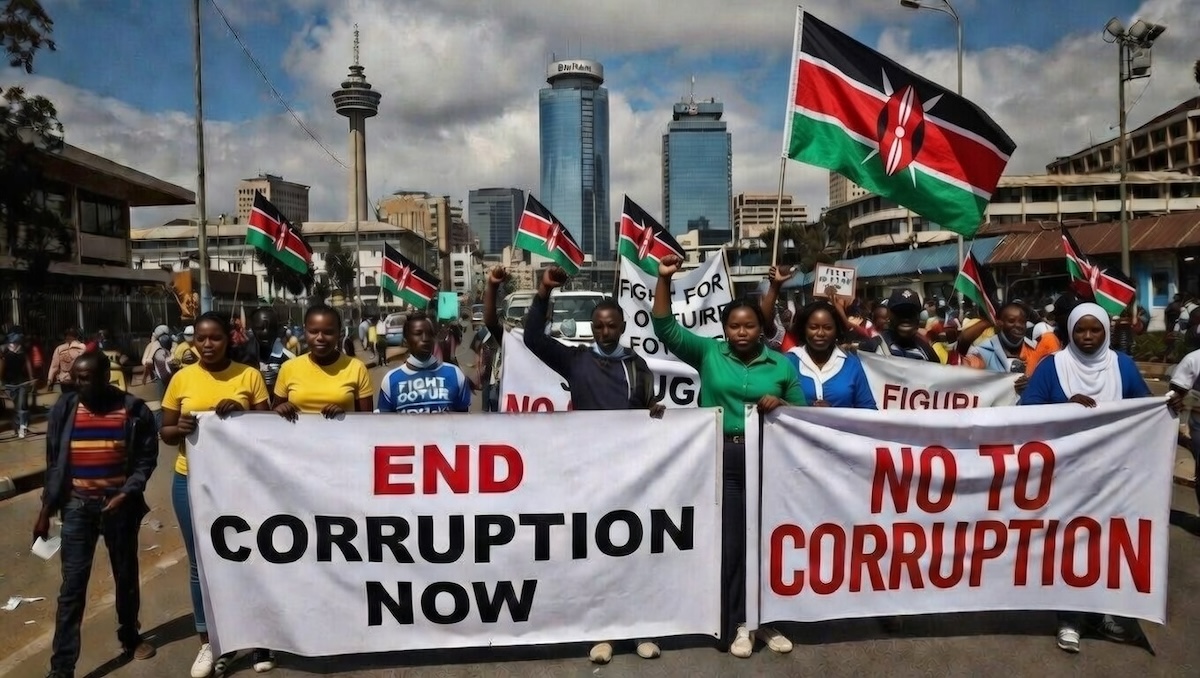
In Part One, we established that Singapore’s anti-corruption miracle was not built on a blank cultural slate, and that Kenya’s own Tom Mboya had articulated a remarkably similar vision in 1965 — a vision that was buried on Government Road on July 5th, 1969, and institutionally sabotaged by the Ndegwa Commission in 1972. Today we get into the machinery: exactly how Singapore engineered honesty into the rational choice, and exactly how terrifying the consequences of corruption are. We begin with a currency note, because the numbers matter — and they land very differently when translated into Kenyan shillings.
A NOTE ON CURRENCY: PUTTING THE NUMBERS IN KENYAN CONTEXT
| Amount (SGD) | In USD | In KES | What it represents |
| S$2.2 million (PM’s annual salary) | ~US$1.74M | ~KES 224 million | KES 18.7M per month. Legitimate. On the payslip. |
| S$600,000 (senior official salary) | ~US$474K | ~KES 61 million/yr | The salary that makes accepting a bribe irrational. |
| S$800,000 (typical mid-career CPF) | ~US$632K | ~KES 81.6 million | What a civil servant risks losing for one bribe. |
| S$50,000 (a “typical” bribe) | ~US$39.5K | ~KES 5.1 million | Risking KES 81M to gain KES 5M. The math is savage. |
| S$1 million (Teh Cheang Wan bribes) | ~US$790K | ~KES 102 million | Cost him everything. Including his life. |
| US$422 million (Keppel O&M fine) | US$422M | ~KES 54.6 billion | No company is too big to jail. |
Exchange rates as at February 2026: 1 SGD ≈ US$0.79 ≈ KES 102. All KES figures are approximate and for illustrative context only.
The Carrot: Making Honesty the Most Lucrative Option
The single most important thing Singapore did to fight corruption was this: it decided to pay its civil servants and ministers what they were actually worth. This sounds ridiculously obvious. In practice, compared to most of Africa, it remains revolutionary. I always wonder about a town called Salga, just after Nakuru on the way to Western Kenya, where transnational truck drivers stop to “milk” fuel from their trucks. I wonder why the vehicle owners — who incidentally install all manner of preventative and tracking technology, yet the practice persists — don’t simply pay the drivers a dignified wage once and for all, thus making it unnecessary to steal.
The logic is iron-clad. If you pay a civil servant a pittance while requiring them to control billion-shilling contracts, you are not running a government — you are running an experiment in temptation. Just like the truck or other business owners who still behave like the mzungu colonialist extracting slave wage labour, you have built a system that practically invites corruption and then feigns shock when corruption occurs.
The Six-Profession Benchmark
Singapore does not set ministerial salaries by political consensus or public opinion. It sets them by a specific, transparent formula. The starting ministerial salary — what they call the MR4 grade — is pegged to two-thirds of the median income of the top four earners from six key professions: bankers, accountants, engineers, lawyers, CEOs of local manufacturers, and CEOs of multinational corporations. The one-third discount is explicitly framed as the “public service discount” — an acknowledgement that serving the nation carries its own non-monetary rewards. But even after this discount, the salary is globally competitive. This ensures the government attracts genuinely talented people rather than only those who cannot find private sector work.
Performance Pay With Skin in the Game
A Singaporean civil servant’s package is not a flat monthly salary. A significant portion is variable: tied to individual performance, to Singapore’s GDP growth, and for the most senior officials, to four specific national indicators — real GDP growth, real income growth of the bottom 20th percentile, the unemployment rate, and real median income growth. If the country thrives, they earn more. If the country stagnates, their bonus is cut or zeroed out. When a minister is personally financially affected by the unemployment rate of ordinary citizens, they are not merely performing public service — they have skin in the game. In Singapore Public participation and accountability are not just slogans… They are written into the pay structure.
The result: a high-performing Singaporean civil servant can legitimately earn the equivalent of 16–18 months of salary in a year. The Carrot is so sweet that reaching for someone else’s basket is simply not rational.
The Deepest Carrot: The CPF and the UTU/Ubuntu They Forgot to Mention
Singapore’s Central Provident Fund, the CPF, is often described as a pension system. That description is accurate but woefully incomplete. The CPF is the economic glue that holds the entire Singaporean social contract together. It is the reason Singapore does not have pensioner homelessness. It is arguably the most powerful anti-corruption tool in the entire arsenal — not because it punishes, but because it makes every citizen a watchman of the national treasury. But before we celebrate Singapore’s genius, let us be honest about something. The CPF is not a foreign idea. It is an ancient African idea in a very expensive suit.
Africa Already Knew This
What is the CPF, stripped of its digital infrastructure and legal architecture? It is compulsory communal saving for the collective good of individual members. It is the chama in Kenya. It is the stokvel in South Africa. It is the susu in West Africa and the Caribbean. It is the iqub in Ethiopia. It is the tontine across francophone Africa. These are savings circles that have existed for centuries — communities pooling resources, building individual assets, and creating collective accountability. The member who withdraws improperly faces social sanction. The member who contributes faithfully builds a nest egg. The community’s health and the individual’s health are inseparably linked.
“Ubuntu ngumuntu ngabantu. I am because we are. The CPF is UTU/Ubuntu with a government mandate, a digital ledger, and a CPIB officer watching the books.” — The UTU/Ubuntu Principle
Singapore did not invent collective savings. Singapore gave it legal teeth, mandatory participation, and protected it from political looting. That last part is where Africa keeps failing its own ancient wisdom.
The mechanics are elegant. A portion of every worker’s salary — 20% for younger workers — is deducted monthly, and employers are legally mandated to add another 17%, making the total contribution 37% of salary. This money does not go into a vague government pool that can be “borrowed” and never returned, as happens with so many African pension funds. It goes into three individual accounts under your name: the Ordinary Account for housing and education, the Special Account strictly for retirement, and the MediSave Account for hospitalisation. Singapore’s extraordinary 90%-plus home ownership rate — the envy of every housing minister on the continent and in the West — flows directly from this: citizens literally use their pension to pay their mortgage while they are still working. By the time they retire, they own a high-value asset, debt-free. No rent eating up their pension. No grey-haired parents sleeping in someone’s veranda or kitchen.
When Ruto speaks about the Affordable Housing Fund or the SHA/SHIF health insurance scheme, he is attempting, however imperfectly, to build a Kenyan version of these CPF buckets. The concept is not wrong. The execution will determine everything. And the execution depends entirely on one question: do Kenyans trust the Stick to keep the Carrot from being looted by the man currently holding the money bag? Do Kenyans trust Ruto?
By the time a senior civil servant is in their mid-forties, their CPF account often holds hundreds of thousands — or millions — of dollars. Their money. It has their name on it. Conviction for a serious corruption offence means forfeiture of all of it. The civil servant facing temptation must ask themselves: is this S$50,000 bribe — KES 5.1 million — worth gambling my S$800,000 CPF account — KES 81.6 million — on? The math is savage. That is precisely the intention.
In many African nations, and in Kenya especially, pension funds are treated as government slush funds — borrowed from, never repaid, eroded by inflation and political whim. Singapore made the CPF individual, transparent, and inviolable. That single design choice changed everything.
The Stick: Where the Law Stops Being Polite
If the Carrot makes corruption financially unnecessary, the Stick makes it financially suicidal. And Singapore’s Stick does not merely discourage corruption — it is designed to be total, overwhelming, and inescapable.
The Presumption of Corruption: Flipping the Script
In most legal systems, you are innocent until proven guilty. The prosecutor must prove beyond a reasonable doubt that you took a bribe. Expensive lawyers exploit every gap. In Singapore, the Prevention of Corruption Act contains a provision that keeps civil servants awake at night: the Presumption of Corruption. If the CPIB demonstrates that a public servant received a “gratification” from someone with official dealings with their office, the law presumes it was corrupt. The accused must prove otherwise.
The Law: “We found the money. We know you work for the government. We therefore assume it is a bribe.” The Official: “No, it is not!” The Law: “Excellent. Then prove it.”
This is not brutal but logical. If you are a senior official earning S$600,000 — KES 61 million — a year, you are not the victim of financial desperation. The burden shifting is proportionate to the power and the compensation. PLO Lumumba attempted a version of this as KACC Boss.
The Unexplained Wealth Clause
The CPIB has the legal authority to examine your total assets against your total legitimate income. The formula is pitiless:
Total Assets − Legitimate Lifetime Income = Presumed Corruption
If a mid-level civil servant is driving a Toyota Land Cruiser V8, wearing an Armani suit, and sends their children to international schools on a salary that could not possibly fund all three, the court can treat unexplained wealth as corroborating evidence of corruption. The math not adding up is itself a crime. Kenyans, I ask you to sit with that for a moment. Let it marinate. If this law existed here, how many of our elected officials — or we — would be filing urgent constitutional petitions before breakfast?
The Cost of Getting Caught: Total Liquidation
Under the Corruption, Drug Trafficking and Other Serious Crimes Act (CDSA), the state can seize every cent deemed to be the proceeds of crime — not just the bribe itself, but everything purchased with it. The convicted official loses their entire government pension. Heavy fines equal to the bribe are imposed on top of jail time. And in a small, high-density, highly networked society, a corruption conviction is a permanent social death sentence. The shame attaches and extends to the family. The Stick is therefore not a punishment so much as a mathematical rewrite: the expected value of corruption is deeply, irreversibly negative.
The CPIB: The Apex Predator of the Legal System
In Kenya and across much of Africa, we have anti-corruption agencies. We have acronyms. We have offices, budgets, press conferences, and annual reports. What we do not have is an anti-corruption body with real teeth, genuine independence, and the legal authority to go wherever the evidence leads, regardless of whose name is on the door. Singapore has that.
Under the Prevention of Corruption Act, a CPIB officer with reasonable suspicion can enter, search, and seize without a warrant, and arrest suspects on the spot. In most democracies, and especially here in Kenya, this level of intrusive power would generate fierce civil liberties debate and petitions. In Singapore, it is the price of integrity, and the citizenry has broadly decided the tradeoff is worth it.
The CPIB can demand access to your bank books, share accounts, and safe deposit boxes. With authorisation from the Public Prosecutor, they can inspect the accounts of not just the suspect, but their spouse, children, parents, and friends. They know corrupt officials rarely keep dirty money in their own name — that they buy apartments for their clandes (side chicks), set up trust accounts for their children, funnel money to elderly parents. The CPIB is legally empowered to follow that trail wherever it leads.
In the United States, the Fifth Amendment gives you the right to remain silent. In Singapore, when the CPIB is at your door, silence is a criminal offence. You are legally cornered: tell the truth and potentially incriminate yourself, or lie and face additional charges. The law removes the comfortable middle ground that expensive lawyers usually manufacture.
And the most ingenious safeguard of all: if the Director of the CPIB wishes to pursue an investigation and the Prime Minister refuses permission, the Director can go directly to the President of Singapore. If the President agrees, the investigation proceeds even against the Prime Minister’s explicit wishes. As the former PM Lee Hsien Loong once said, the CPIB “has to report to somebody; it cannot report to God.” No one, at any level, is untouchable.
Are we ready for this, Kenyans? A system where no phone call from State House or “above”, no statement from a party chairman or local kingpin, no prayer from the national cathedral or mosque can halt an investigation once it has been properly initiated?
NEXT — Part Three: The Verdict The Stick in action — three cases that prove Singapore means every word. A minister who chose death over trial. A Cabinet member jailed for F1 tickets. And the question Kenya must now answer: to be, or not to be?
All Singapore case details, legislation, and salary benchmarks are drawn from publicly available official sources. Exchange rates as at February 2026.
Follow This Is Africa on Twitter and Facebook to join the conversation.
You may like


The Shock Doctrine Live in the Gulf


Mark Carney and the new power calculation, where does Africa stand?


Singapore: To Be or Not To Be, Kenya? The Verdict — Three Cases, One Stool, and a Choice We Cannot Avoid


Singapore: To Be or Not To Be, Kenya? The Blueprint We Already Had — And How We Buried It | Part 1


Raila Odinga mastered the art of political compromise for the good of Kenya


“UTU” as the New–Old Political Philosophy
frompoo.com
March 3, 2026 at 5:56 pm
i never came across a well indepth article like this, this is the second time i am reading it, i really enjoy it, thanx for the great work, i appreciate it, checking back soon. from the team frompoo.com