
Politics and Society
“An Accomplice to Injustice”: Pan-African Voices Blasts AU Commission for “Betraying” Democratic Ideals
The African Union Commission faces fierce continent-wide backlash for endorsing Uganda’s flawed 2026 elections, where internet shutdowns, opposition harassment, and violence marred the process. Over 500 Pan-African voices in the Africans Rising open letter to Chairperson Mahmoud Ali Youssouf accuse the AUC of legitimizing authoritarianism and betraying democratic ideals.

Published
7 months agoon
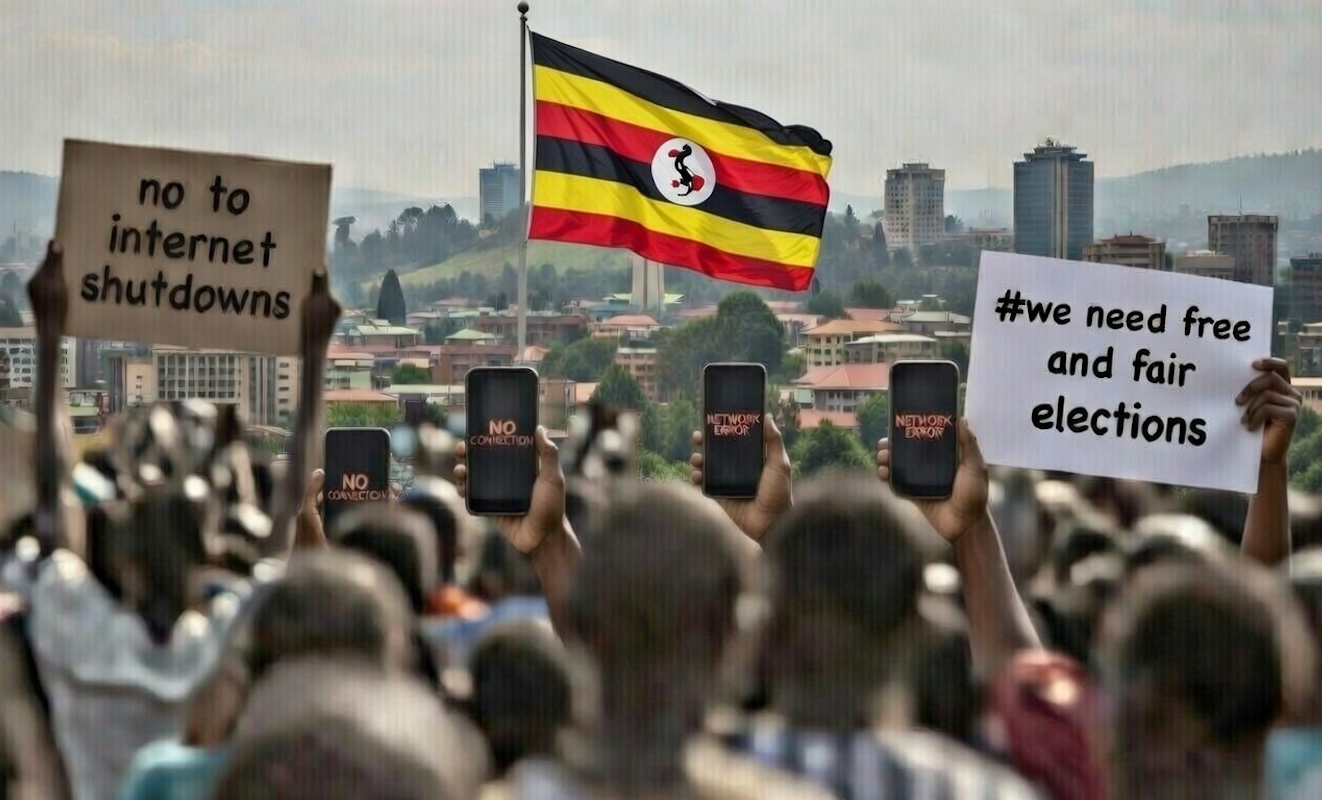
The African Union Commission (AUC) is facing a blistering wave of criticism from across the continent because of its recent dismissive posture on issues of human rights violations and democratic erosions, with its notable recent endorsement of undemocratic elections in Uganda. A movement of concerned of Pan-African voices, movements, human rights defenders, and civil society organizations under the banner of Africans Rising for Unity, Justice, Peace and Dignity, have issued a scathing open letter to the Chairperson of the AUC, Mahmoud Ali Youssouf, accusing the institution of legitimizing authoritarianism and abandoning the African people.
The outcry was triggered by an AU statement dated January 17, 2026, which commended the conduct of Uganda’s elections and congratulated President Yoweri Museveni on his re-election. The movement, representing various people’s formations and the Diaspora, described the AU’s stance not as a mere diplomatic error, but as a “profound and dangerous distortion of reality on the ground.”
In the letter over 500 signatories from over 52 countries across the continent and diaspora argue that the Commission’s posture represents a direct assault on the democratic rights of citizens. They contend that the conditions in Uganda, characterized by a state-sponsored internet shutdown, the systematic harassment of opposition leaders, and the violent suppression of dissent, rendered any claim of a “free and fair” election impossible.
“To commend such a process is to legitimise repression and reward authoritarianism,” the letter reads. “It sends a clear and dangerous message across the continent: that dismantling democratic safeguards will be met with continental approval, not condemnation.”
The movement asserts that the situation in Uganda is part of a recurring and “dangerous pattern” within the AU leadership. The letter cites previous electoral cycles in Tanzania, Sudan, and Zimbabwe, where the Union allegedly prioritized the stability of political elites over the rights and justice of the populace.
The activists pointed to a specific contradiction regarding the 2025 Tanzanian elections. They noted that the Chairperson issued a congratulatory message labeling the process “peaceful” before the AU’s own observer missions on the field had even finished their work. When the official mission report was eventually released, it concluded the elections failed to meet the standards of the African Charter on Democracy, directly contradicting the Chairperson’s earlier praise.
The letter raises fundamental questions about the AU’s relevance, asking: “What credibility does the African Union retain when it praises elections held under an internet shutdown and people are ruled through fear and force? What purpose does it serve when it speaks of democracy while people are ruled through fear and force?”
By choosing “congratulatory repression over accountability,” the organizations claim the Commission has violated its own foundational principles, including the AU Constitutive Act and the African Charter on Democracy, Elections, and Governance.
The movement warns that the African Union is increasingly seen not as a guardian of democratic ideals, but as an “accomplice” to the very regimes that stifle them. This deepening rift between the Union’s leadership and the aspirations of the African people, they argue, has created a “glaring disconnect” that threatens the long-term legitimacy of the continental body.
In the letter, the movement demands that the African Union Commission:
- Recognise that rushing to congratulate leaders following questionable elections legitimizes repression and erodes AU credibility, as evidenced by public responses to the AU’s statement on social media.
- Acknowledge the shifting political consciousness and growing democratic expectation of Africa’s youth majority
- Take concrete steps to regain public trust and confidence of the African Union
- Realign its conduct and public position with the Union’s founding principles of democracy, human rights and people-centered governance.
The open letter has so far attracted support from hundreds of organisations and individuals across 51 countries in Africa and the diaspora
As at press time, the African Union Commission has not issued a formal response to the letter.
Follow This Is Africa on Twitter and Facebook to join the conversation.
You may like


The passport, the database and the State: Who controls digital Zimbabwe?


When the Algorithm decides what we see: Who governs Africa’s digital democracy?


Education is neither a commercial venture nor a credit facility but a basic need and a public good


The third global wave of autocratization One playbook, two instruments: Legal façades and structural decay in the world, with Indonesia and Kenya as case studies


A mirror across the Zambezi: Why Zambia’s August 13 vote matters to Zimbabwe and SADC


Explaining the theory of political ‘Morari’ in Zimbabwe