
Politics and Society
Can a people’s Constitution beat a colonial immunity deal? Omtatah takes on the Bretton Woods Agreements Act
A 1963 statute signed in Kenya’s first months of independence is now being tested against the 2010 Constitution’s rights framework. The outcome will shape whether African courts can ever hold global lenders accountable.

Published
2 months agoon
A Relic of Independence Morning
Kenya became independent on December 12, 1963. Within months, it signed the Bretton Woods Agreements Act; legislation granting the International Monetary Fund and the World Bank immunity from court proceedings, taxation, search, and seizure before Kenyan courts. The ink on sovereignty was barely dry. Kenya’s negotiating leverage then was essentially zero! And for 63 long years, that compact was never revisited.
When Senator Okiya Omtatah filed his landmark odious debt petition in April 2025, the IMF invoked precisely that Act to secure its removal from the proceedings. The High Court, bound by Kenya’s ratified treaty obligations, complied. The Fund walked out of a case alleging it had extended hidden loans in violation of Kenya’s own constitutional borrowing framework and faced no further scrutiny.
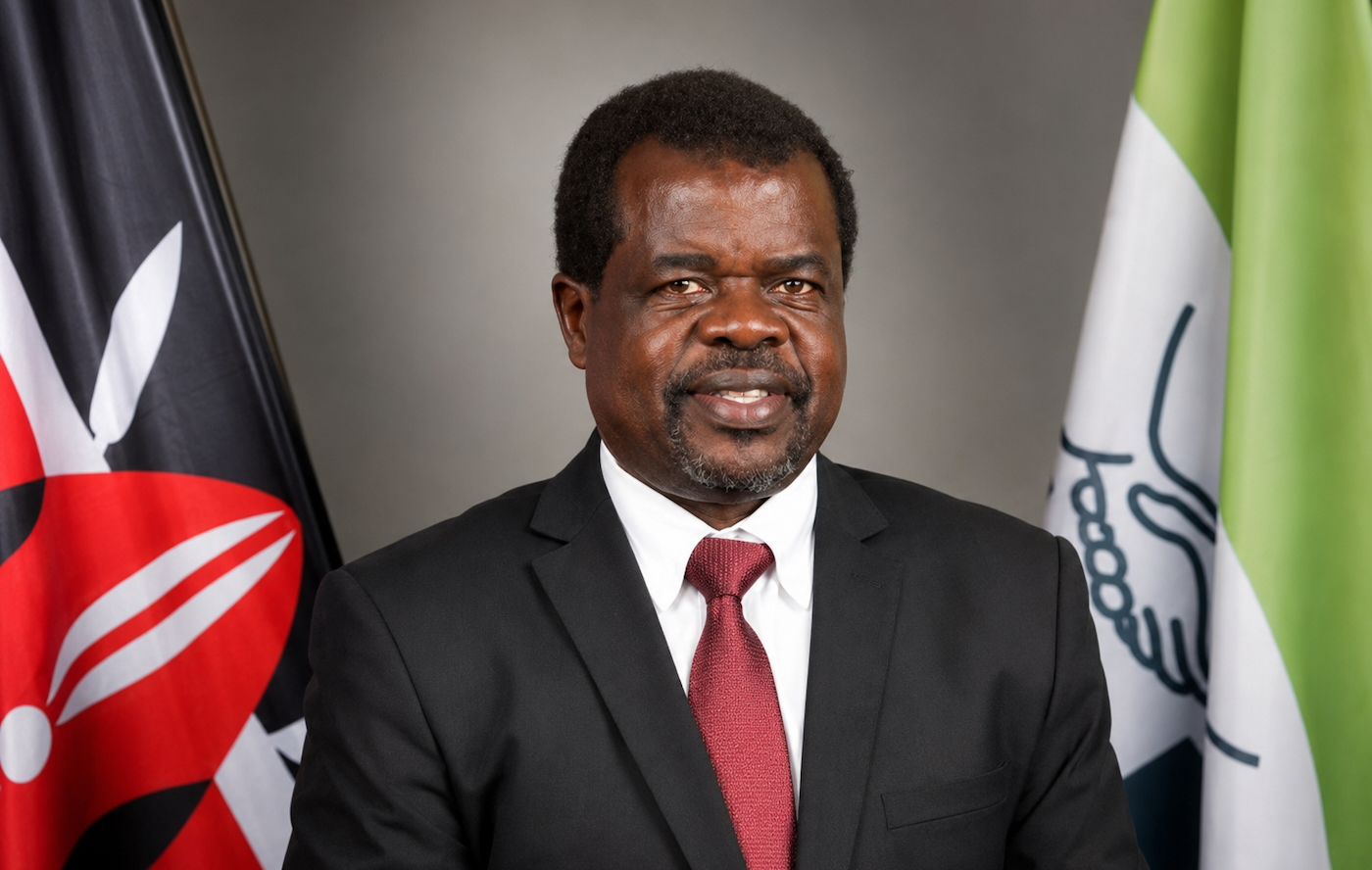
Omtatah’s response was immediate. If the Bretton Woods Agreements Act is the shield, then the Act itself must fall. He has now filed a fresh constitutional petition alongside activists Bernard Muchiri and Naomi Misati, challenging the Act’s compatibility with the Constitution of Kenya 2010.
What the Petition Actually Argues
The popular framing, that Omtatah simply wants to “sue the IMF”, undersells the constitutional seriousness of what is being argued.
The petition identifies three structural failures in the Bretton Woods Agreements Act. Section 3 allows the Executive to implement international financial agreements without parliamentary approval. Section 4 authorizes payments directly from the Consolidated Fund to the IMF and World Bank without annual appropriation by Parliament. Section 5 incorporates the institutions’ immunity provisions wholesale into Kenyan law, with no alternative mechanism of redress for Kenyans harmed by their conduct.
The combined effect is what the petition calls “a closed loop of unaccountable financial governance”: the Executive commits Kenya to international obligations, borrows on terms it sets itself, authorizes payments bypassing Parliament, and the institutions receiving those funds are shielded from any judicial scrutiny. Accountability has no entry point.
The petition does not ask whether international institutions deserve some immunity. It asks whether absolute immunity — with no alternative remedy — can survive a constitution built on the right of access to justice.
The constitutional arguments are specific. The Act violates Chapter Twelve on public finance by enabling borrowing and payment without parliamentary oversight. It violates the provisions vesting sovereignty in the people and establishing Parliament’s legislative supremacy. It effectively amends the Constitution without following the procedures in Articles 255 to 257. And it fails the proportionality test under Article 24: any limitation of the right of access to justice must be reasonable and justifiable and must leave open some effective alternative remedy. The current Act offers none.
Where It Gets Hard
The petition is constitutionally well-constructed. But it faces real obstacles.
The first is Article 2(6) of the same 2010 Constitution the petitioners rely on. That provision makes ratified international treaties part of Kenyan domestic law. The IMF’s Articles of Agreement, which include the immunity provisions, are a treaty obligation, not merely a domestic statute. A court can strike down the Bretton Woods Agreements Act and still leave Kenya bound by the underlying treaty. The domestic implementing statute and the international obligation are legally separable, and the IMF will argue that distinction forcefully.
The second is institutional caution. The High Court declined to fast-track the petition as urgent, setting a mention date of September 29, 2026. The Treasury and Executive will resist vigorously, and the IMF will almost certainly intervene. A populist argument will be made that a ruling eroding institutional immunity destabilizes Kenya’s access to international capital markets. Courts are not insensitive to systemic risk framing, particularly at a moment of active IMF engagement.
Why a Partial Win Still Changes Everything Though
The strategic intelligence of this petition is that total victory is not required for it to be transformative.
If the court strikes down Section 4 alone, payments from the Consolidated Fund without parliamentary appropriation, it fundamentally restructures Kenya’s public finance relationship with Bretton Woods. Every future disbursement would require parliamentary scrutiny: exactly the oversight mechanism the odious debt case alleges was systematically bypassed across a decade of unconstitutional borrowing.
If the court accepts the Article 24 proportionality argument, that absolute immunity without an effective alternative remedy is unconstitutional, it establishes a principle that travels. It would require either a meaningful alternative dispute mechanism, or a narrowing of the immunity itself. Once established, that principle becomes available to every African country with a similar 1963-era immunity compact.
Omtatah does not need the court to declare the IMF outside the law. He needs it to declare that Kenyans are inside it.
Africa’s Courts and the Colonial Compact
There is a reason this case matters beyond Kenya’s borders. Every African state that joined the Bretton Woods institutions at or shortly after independence signed some version of this compact under conditions of extreme vulnerability. These immunity frameworks were not negotiated between equals. They were signed by newly decolonized states desperate for development financing, accepting terms designed and governed by the same Global North that had just been their colonial administrator.
The 2010 Constitution of Kenya is not that moment. It was written through an explicitly popular process that placed the sovereignty of the people, access to justice, and the accountability of public finance at its core. When Omtatah argues that a 1963 statute cannot survive a 2010 Constitution built on those foundations, he is making a claim about constitutional time: that a people’s democratic remaking of their legal order should have the power to dislodge compacts signed on their behalf before they had any real say.
Kenyan courts have struck down colonial-era legislation before. They have read the 2010 Constitution as a genuinely transformative document. The question is whether that transformation extends to international institutional immunity, to the compacts designed, above all, to place global lenders beyond the reach of precisely the courts now being asked to adjudicate.
Whatever the outcome, this case marks a threshold moment: the first serious African constitutional challenge to the post-independence immunity compact that has sheltered Bretton Woods institutions from accountability for six decades. Win or lose, it establishes that the question can be asked, in a courtroom, on constitutional grounds, by citizens acting in the public interest. That, in itself, is not nothing. In time, it may be everything.
Sources: HCCHRPET E216 of 2025 (Omtatah & others v. Kenyatta, Ruto & others); Senator Okiya Omtatah, Press Statement, 25 June 2026; Sam Kiplagat, “Okiya Omtatah challenges IMF, World Bank immunity law in court,” NTV Kenya, 27 July 2026; “Omtatah Fights to Strip IMF, World Bank of Untouchable Legal Status in Kenya,” Nairobi Timez; Tuko.co.ke, 26 June 2026; Bretton Woods Agreements Act (Cap. 491B, Laws of Kenya); Constitution of Kenya, 2010.
Follow This Is Africa on Twitter and Facebook to join the conversation.
You may like


The passport, the database and the State: Who controls digital Zimbabwe?


Zambia 2026: Beyond the ballot did SADC duck the election crisis? (SAPES Dialogue forum presentation)


Democracy in code: How digital power is reshaping sovereignty in Africa


Zambia at a crossroads: Preserving democracy beyond the ballot


The third global wave of autocratization One playbook, two instruments: Legal façades and structural decay in the world, with Indonesia and Kenya as case studies


The great ledger correction: Why cancelling the debt of the Global South is restitution, not forgiveness