
Politics and Society
The third global wave of autocratization One playbook, two instruments: Legal façades and structural decay in the world, with Indonesia and Kenya as case studies
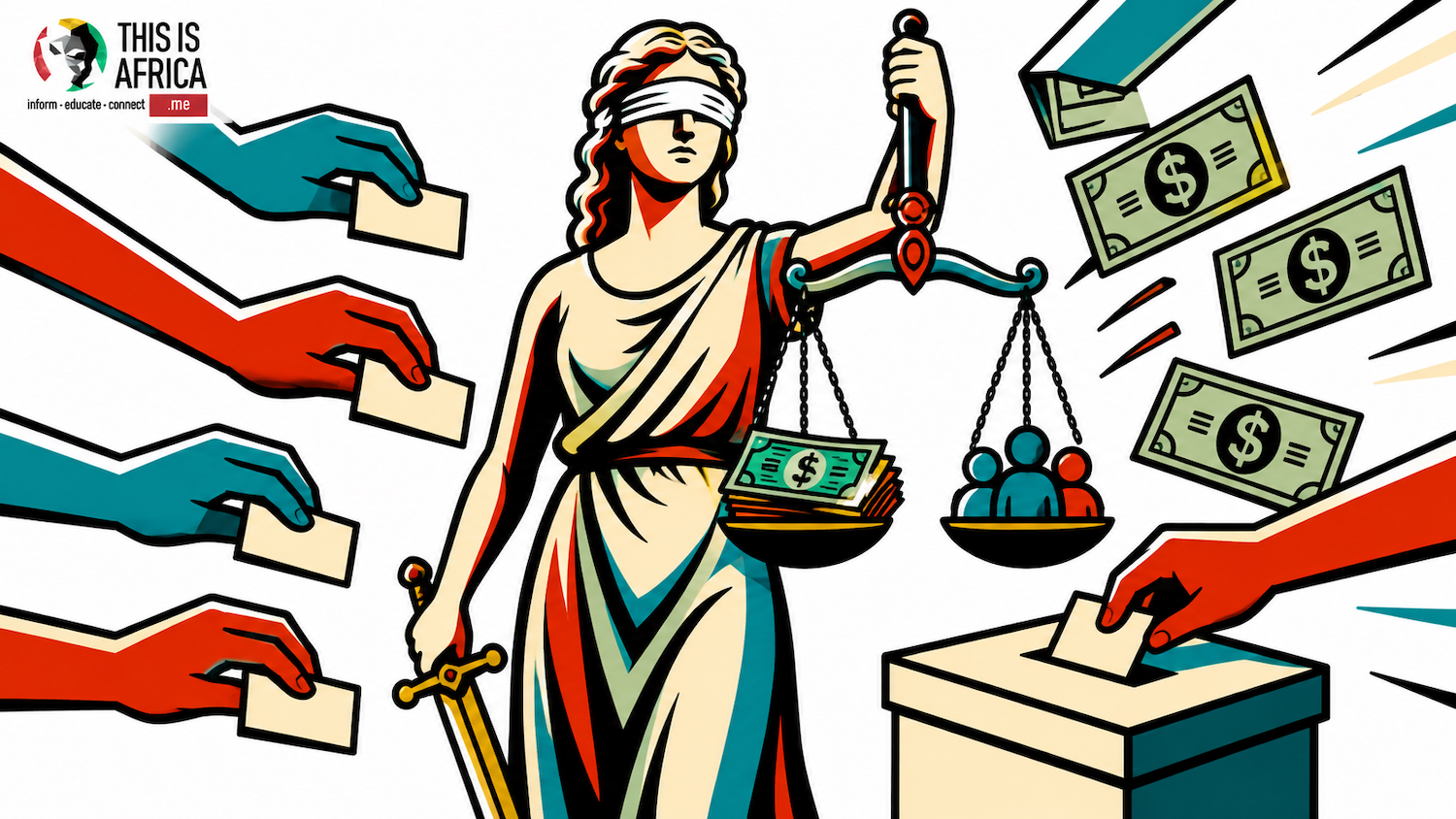
The modern autocrat doesn’t need a military coup; they just rewrite the law. From Kenya to Indonesia, leaders are legally dismantling democracies by centralizing wealth, weaponizing security, and absorbing political opposition.

Published
2 months agoon
On Monday, August 10, 2026, President William Ruto stood before a retreat of the UDA-ODM coalition in Naivasha and told the country what next year’s election is really about. The alliance, he said, “must win.” The alternative, the opposition that is, was unthinkable: “A group of people who have no plan, no agenda, no policy, no vision, is too dangerous for Kenya.”
Let us consider that for a moment. The president was speaking from inside the very fusion that has already absorbed half of the opposition, and from that platform he pronounced the Kenyan leadership and citizens still standing outside it a danger to the nation. No tanks rolled. No emergency was declared. A head of state simply taught his people, in the mild register of a policy retreat, that opposition itself is a threat to be managed and removed. This is what the recapture of a democracy sounds like in our century. It does not announce itself with a coup. It reassures you with a policy plan.
What happened in Naivasha is not a Kenyan peculiarity. It is one local performance of a global script, and this script is winning.
The 2026 Democracy Report from the V-Dem Institute, the most comprehensive measure of democracy humanity has yet built, delivers a verdict that should stop every organizer in their tracks. For the average person on earth, the level of democracy has fallen back to where it stood in 1978. Seventy-four per cent of humanity, roughly six billion people, now live under some form of autocracy. Only seven per cent live in liberal democracies. Almost the entire harvest of the post-1974 “third wave of democratization,” the wave that began with Portugal’s Carnation Revolution and rolled through Africa, Asia, and Latin America, has been eaten.
We are living, the political scientists tell us, through the mirror image of that hope: the “Third Wave of Autocratisation.” Forty-four countries are currently sliding. Twenty-eight of them were functioning democracies when the decline began, and fifteen have already crossed over into outright autocracy.
Here is the detail that matters most for those of us organizing from the Global South. This is not a story of the periphery falling away from a virtuous center. The center is rotting first. In this same report, the United States, the self-appointed headmaster and policeman of the democratic world, lost its long-held status as a liberal democracy. The metropole is not a standard we are failing to reach. It is the laboratory where the new authoritarianism is refined and then exported. When our governments reach for these tools, they are not betraying an international order. They are studying its most powerful members.
Reading the Wave Through Utu
For those of us who root our politics in Utu, the philosophy of shared humanity carried in the Swahili Mtu ni Watu, a person is a person because of and through other people, this wave has a precise character. Autocratization is the political grammar of an anti-Utu order.
The extractive, centralizing state is the anti-Utu state
Every move in the modern autocrat’s playbook, the concentration of power upward, the hoarding of national wealth in opaque vaults, the hollowing out of the community’s voice, is a structural negation of the idea that authority flows from and belongs to the people. The extractive, centralizing state is the anti-Utu state. It does not simply govern badly. It severs the very bonds of mutual belonging that make self-governance possible. To resist it, we must first learn to read it, patiently and without flinching.
The New Playbook: Recapture Behind a Legal Façade
The 20th-century autocrat announced himself with tanks in the street. The 21st-century autocrat arrives with a bill on the order paper. He does not break the law. He rewrites it. Riding a democratic ticket to a legislative supermajority, he dismantles the checks on his own power from the inside, one “reform” at a time, while leaving the outward furniture of democracy standing.
The machinery runs on three moving parts.
The illusion of legality. Compliant parliaments pass laws that erode judicial independence and cripple accountability, so that every act of capture carries a stamp, a signature, and a gazette number.
Decay from within. Elections continue, offering a vital veneer of legitimacy, while the playing field is tilted so steeply that the outcome is engineered long before a single ballot is cast.
Securitization. The state’s coercive power and its economic power are fused into centralized vehicles insulated from public scrutiny, rewarding loyal elites and starving the opposition of oxygen.
Indonesia: The Barracks and the Vault
Nearly three decades after the fall of Suharto’s New Order, Indonesia is watching the armed forces (TNI) walk back into civilian government through the front door.
President Prabowo Subianto, a former general discharged in 1998 for his command role in the abduction of student activists, has led a project of re-militarization that is entirely legal on paper. In March 2025, his coalition pushed through a revision of the 2004 TNI Law that raised the number of civilian state agencies where active-duty officers may serve from ten to fourteen, dragging the country toward what critics have named “Dwifungsi 2.0,” a revival of the dual-function doctrine that once let the military run the country’s political and administrative life. The revision passed with no meaningful public consultation, and it moved because Prabowo commands the Koalisi Indonesia Maju Plus (KIM Plus), a supermajority cartel holding more than eighty per cent of parliament, with the sole remaining opposition party often voting with the government anyway.
Beneath the legislation sits the deeper structure: the Territorial Command System (KODAM), a shadow chain of military authority running parallel to the civilian state right down to the village, where non-commissioned officers known as Babinsa keep continuous watch over community life, local disputes, and neighbourhood security. This is the state’s coercive nervous system, present in every hamlet.
But Indonesia is not only militarizing. It is also hoarding. In February 2025, Prabowo launched Danantara, a sovereign wealth fund built as a super-holding entity that swallows all of the country’s state-owned enterprises and their assets, a portfolio aiming toward nine hundred billion dollars. Prabowo himself chairs its supervisory board. Its management is packed with his political and business allies. It was fast-tracked through the same coalition-dominated parliament, and it now faces a constitutional challenge arguing that the law cuts state enterprises loose from the oversight that once guarded against corruption. International ratings agencies have moved Indonesia’s outlook to negative, citing precisely this: declining fiscal transparency and a fund whose strategic projects surface publicly only after the decisions have already been made.
Read together, the picture is unmistakable. The barracks and the vault, moving in step, both insulated from the people they claim to serve.
Kenya: The Chief and the Fund
Kenya is running the same two instruments, in reverse order and a different key.
Start with the vault. In July 2026, President William Ruto assented to the Sovereign Wealth Fund Act, championed as a prudent tool for turning resource revenues into savings for future generations. On its face, the Act carries guardrails: money routed first through a special holding account at the Central Bank, a bar on the fund lending or serving as collateral for government borrowing, a mandated reserve for the generations to come. Defenders will point to these clauses as proof of good faith.
The lesson from Danantara is that guardrails are only as strong as the appointments and the audit access behind them. A fund controlled by the executive, whose selection of “strategic” projects surfaces only after the fact, hollows out oversight no matter what the statute promises. The question is never what the law says on paper. It is who holds the pen, and who is allowed to look inside.
Now the barracks, which in Kenya wears the uniform of the chief. Over the past year, Ruto has reached back into Kenya’s most Moi-era instinct and revived the provincial administration as a grassroots machine. Close to six thousand chiefs and assistant chiefs have been passed through a paramilitary induction and “security management” course at the National Police College. A new National Government Administration Police Unit, beginning with 1,860 officers, has been stood up to work directly alongside chiefs across the country. More than one hundred thousand village elders have been folded into the national administration on state stipends, smartphones, and training, tasked with carrying and defending government messaging at the village level. Ruto has been unusually candid about what this is for, telling elders that their benefits will rise further “when we cross the next election.”
This is Babinsa in Kikuyu, Kiswahili, Dholuo, and Kalenjin. It is the same architecture Jakarta built: a coercive nervous system reaching into every sub-location, doubling as the ruling party’s eyes, ears, and voice. During the Moi years, opposition reformers including Raila Odinga, Kenneth Matiba, and Charles Rubia accused exactly this apparatus of frustrating the opposition and embodying the raw authority of the state. The will of the people via the 2010 constitution did away with it, but the state refused to dismantle it. Kenyans have seen this film. It is being remade with tablets and a dedicated police unit.
There is one place where Kenya breaks the “legal façade” script, and honesty demands we name it. The polite version of the playbook says the modern autocrat wins “without firing a single shot.” In Kenya, shots have been fired. The Gen Z uprising was met with live rounds, enforced disappearances, and abductions. Nairobi’s model is therefore a hybrid: the clean legal instruments of the Fund and the administrative machine, welded to old-fashioned lethal repression. That combination is not a softer form of autocratization. In some ways it is a more brazen one, because it no longer bothers to hide.
Now, a correction to a tempting but lazy reading. It is easy to file Indonesia under “military capture” and Kenya under “economic capture,” and to leave it there. That binary is too clean, and it lets both governments off the hook. The truth is darker. It is one playbook, and each state is running both instruments at once. Coercion and capital. The barracks and the vault. The difference between Jakarta and Nairobi is not which tool they use. It is the sequence and the accent.
The Cartel and the Handshake: Capturing the Opposition
The final shared move is the neutralization of opposition, not by banning it, but by absorbing it.
In Indonesia, KIM Plus leaves a single nominal opposition party that frequently sides with the government, so that civil society, not parliament, becomes the last real check on power. In Kenya, the same result has been achieved through the “broad-based government,” which drew sections of Raila Odinga’s ODM into Ruto’s orbit. Civil Society is largely moribund. The tell is public. As the Sovereign Wealth Fund was signed, senior ODM figures were out campaigning for Ruto and defending the Fund in opposition heartlands. A parliament without a genuine opposition is a rubber stamp with better branding.
Alongside co-optation runs delegitimization, and we have already heard its clearest expression: the Naivasha verdict that the opposition is “too dangerous for Kenya.” That sentence is not loose campaign noise. It is the connective logic of the entire project. The parties absorbed into the tent must win. The citizens still outside it are recast as a threat to the nation. Co-optation neutralizes the opposition that can be bought; delegitimization prepares the ground to remove the opposition that cannot. Between the two, the space for a legitimate alternative government quietly closes, and not a single law has to be visibly broken.
The Supply Chain: Autocracy Has Vendors
There is a layer beneath the barracks and the vault that neither Jakarta nor Nairobi built alone, and it is the one Anne Applebaum maps most sharply in her book Autocracy, Inc. She argues that the modern autocrat is not a lone strongman but a node in a network: kleptocratic financiers, security services that arm and train one another across borders, and technologists who supply the surveillance and the propaganda. Cambridge Analytica, anyone? What binds the network is not ideology. Venezuela, Russia, China, and in our case Uganda, Rwanda and their many imitators agree on almost nothing except a shared appetite for “power, wealth, and impunity.” Their cooperation is transactional, which is exactly why it slides so easily across every cultural and geographic line. And its most useful enablers, Applebaum insists, sit inside the democracies: the banks, law firms, commodity traders, and reputation managers that launder both the money and the story.
Once you see the network, our two case studies stop looking purely domestic. Kenya’s surveillance state was not invented in Nairobi. Since 2014 the city’s integrated public safety and surveillance system, close to two thousand cameras with facial recognition feeding a central police command, was built and run by Huawei and Safaricom and financed by China’s Export-Import Bank. It is a franchise of Huawei’s Safe City model, sold to more than a hundred jurisdictions and implicated next door in Uganda, where the same class of technology was used to break into the communications of the opposition figure Bobi Wine. Nairobi did not build a panopticon. It subscribed to one. It is now coming to bite via automated traffic fines.
If Kenya shows the technology layer, the Great Lakes shows the security layer in its rawest form, and here Uganda and Rwanda operate as something close to coercion contractors: mobile armies whose product is force and whose business is extraction. Rwanda’s army, backing the M23 militia with an estimated three to six thousand troops, helped seize Goma and Bukavu in early 2025, and UN experts now describe the smuggling of Congolese coltan and gold into Rwanda as reaching unprecedented levels. Kigali exports record volumes of minerals it barely produces, laundered into “conflict-free” chains bound for the world’s electronics. The very same Rwandan Defence Force, sanctioned by Washington over Congo, simultaneously guards TotalEnergies’ and ExxonMobil’s twenty-five-billion-dollar gas project in northern Mozambique, a deployment the European Union bankrolled and, when that money lapsed, French officials and the oil majors scrambled to keep alive. One army, two contracts: loot the Congo, protect the LNG.
Uganda runs the same trade in a quieter key. Its forces sit in eastern Congo under Operation Shujaa, officially hunting the ADF while, UN reporting notes, guarding Uganda’s economic interests, and Uganda exported a record three point four billion dollars of gold in 2024, much of it Congolese, nearly all of it onward to the United Arab Emirates. In March 2025, Ugandan special forces rolled into Juba to shore up Salva Kiir against his rivals, a deployment Amnesty International says breached the South Sudan arms embargo and which Kampala’s parliament waved through without even stating its purpose. And for nearly two decades Uganda has been the largest troop contributor to the African Union’s mission in Somalia, its coercion underwritten by Western and AU funders, a service now stretching, under American courtship, toward a proposed stabilization role as far away as Gaza. Museveni’s product is security, and the buyers are many.
Notice who is paying. The coltan is bought by a Luxembourg trader; the gold is cleared through Dubai. The LNG guard duty is financed from Brussels and lobbied for from Paris. Washington sanctions the Rwandan army with one hand and, through its oil companies, works to shield it with the other. This is Applebaum’s thesis rendered in African blood and minerals: a transactional network bound by nothing but power and profit, in which the democracies are not innocent bystanders but paying customers. DRC, South Sudan, and Somalia are cast as the terrain on which the business is transacted, their people reduced to the externalized cost of everyone else’s deal.
Kenya Joins the Firm
The same network that rents force outward also trades it inward, and Kenya sits on both sides of that trade. Nairobi did not import foreign troops to break its own protests, whatever the rumors claimed. What it did was quieter and better documented: it became an exporter of repression for its neighbours. In November 2024, Kenyan operatives seized the Ugandan opposition leader Kizza Besigye from a Nairobi street and delivered him to a military court in Kampala; earlier, thirty-six of his party members had been deported to Uganda on invented terrorism charges, and four Turkish nationals were bundled back to the government they had fled. Autocracies do not only surveil and shoot their own citizens. They swap dissidents across borders like a clearing house.
But under Ruto, Kenya has done more than export dissidents. It has taken a seat in the firm. In February 2025, at the KICC in the heart of Nairobi, it played host as the Rapid Support Forces, the Sudanese paramilitary whose commander, Mohamed Hamdan Dagalo, “Hemedti,” Washington had sanctioned only weeks earlier over mass atrocities in Darfur, signed a charter proclaiming a parallel Sudanese government. A state that fires live rounds at its own young had rolled out the carpet for a warlord’s government-in-exile, drawing formal condemnation from Khartoum, the United Nations, and much of the region.
Follow the gold and the alignment sharpens. Kenya mines almost none of it, roughly four hundred kilograms in 2023, yet Dubai’s books recorded nearly ten tonnes arriving from Kenya that same year, and by 2025 Kenyan gold shipments to the UAE had surged past forty tonnes in nine months, more than triple the year before. The Swiss investigative group SwissAid traces the gap to conflict gold from Sudan, South Sudan, and the DRC, laundered through Nairobi and the Eastleigh neighbourhood and flown on to Dubai; in one episode, a three-tonne consignment of Congolese gold simply vanished at Nairobi’s JKIA airport. The paramilitary is handed a capital for its politics; the region’s blood gold gets a Kenyan customs stamp on its way to the Gulf. This is what it means to join the network, not as its victim but as its facilitator.
The appetite is continental, and it runs past bodies to land. In Tanzania, the same government whose forces killed hundreds after the October 2025 election handed Blue Carbon, a firm run by a member of Dubai’s ruling family, management rights over roughly eight per cent of the country, with tens of thousands of Maasai facing eviction so a petrostate can buy a license to keep pumping oil. Amnesty International has documented Tanzanian security forces clearing Maasai from Loliondo to make way for an Emirati hunting concession. From the gold bankrolling Sudan’s war to the Sahel juntas paying Russian mercenaries in mining rights, the equation holds: local force, local bodies, distant capital.
This is where the accounting becomes unbearable. A network that enters a Congolese miner, a displaced Maasai herder, an abducted Nairobi student, and a Darfuri villager into the same ledger, each of them a cost to be minimized, has decided that some human beings are raw material. And it reframes the ledger of states that follows. Mexico, El Salvador, India, Georgia, Togo, Indonesia, and Kenya are not each independently stumbling onto the same tricks. Many are customers of the same vendors, financiers, and enforcers. The wave is coordinated because the market is.
Utu refuses the premise. Mtu ni Watu is not a sentiment; it is a boundary. Drawing it, insisting that no person is an externality on someone else’s balance sheet, is where the resistance begins.
The Same Move, Country to Country
The wave is regional in nothing and global in everything. The methods are tailored to local ground yet deeply connected in logic.
| Country | Method of Democratic Transformation |
| Mexico | Used an overwhelming legislative majority to force the direct popular election of judges, compromising judicial independence and insulating the ruling party. |
| El Salvador | Leveraged immense popularity to purge the Supreme Court, alter the constitution for immediate re-election, and govern through a permanent, militarized state of exception. |
| India | Kept regular elections running while turning tax authorities and financial-investigation units into instruments to freeze the assets of opposition parties. |
| Georgia | Overrode presidential vetoes to pass restrictive “foreign agent” laws, deliberately defunding and criminalizing domestic rights groups. |
| Togo | Rewrote the constitution to shift toward a parliamentary system, engineering a powerful new office that lets the incumbent govern indefinitely without facing voters. |
Different costumes, one choreography: keep the vote, capture everything that gives the vote meaning.
Reclaiming the Narrative: Organizing for Utu
The decay is not a force of nature. It is a set of choices, and choices can be met with other choices.
In Indonesia, the “Kembali ke Barak” (Return to the Barracks) movement has roared back to life. The phrase was the rallying cry of the 1998 Reformasi that first sent the military out of civilian government, and its resurgence in 2025 produced something disciplined: the “17+8 Tuntutan Rakyat,” seventeen immediate demands and eight long-term structural reforms, each aimed at a specific loophole in the legal façade. Withdraw the TNI from civilian policing. Revoke the mandates embedding soldiers in civilian ministries and state farming projects. Close the placement loopholes in the Armed Forces Act. Empower independent human rights watchdogs. This is what it looks like when a movement stops shouting at the machine and starts naming its bolts.
In Kenya, the Gen Z uprising did the same work in a different register, upending a carefully laid plan and forcing the state to concede, even as the administration presses forward as though the reckoning was a passing squall. With the parliamentary opposition compromised, civil society, the courts, the justice centers, and the grassroots coalitions are now the country’s real line of defence. The struggle to protect devolution, to demand authentic and meaningful public participation despite its recent watering down through the passage of an importent law by parliament, and to force the Fund and the provincial machine into the light is not separate from the fight for democracy. It is the fight!
This is the line between protest and power. Protest reacts to the machine; power builds the thing the machine cannot capture. That is the slow, unglamorous labour in front of us, and it has a name: movement-building anchored not in centralized, extractive power but in Utu. Autocratization concentrates authority until the community vanishes into the state. Utu runs the other way, insisting that power belongs to the people it serves and forfeits its legitimacy the moment it severs that bond.
So let the task be concrete. Defend devolution as if it were the last barricade, because it is. Drag the Fund and the provincial machine into daylight. Build justice centers and organizing tables in the very sub-locations the chiefs are sent to watch. The barracks and the vault are rising in every direction; against them we raise the commons, mtaa by mtaa, county by county, until the community itself becomes the check no supermajority can repeal.
Follow This Is Africa on Twitter and Facebook to join the conversation.
You may like


Infrastructure before enforcement: Why Kenya’s speed camera ambush breaks the social contract


Maputo to Host 2026 All-African Movement Assembly for Activists & Human Rights Defenders


The passport, the database and the State: Who controls digital Zimbabwe?


When the Algorithm decides what we see: Who governs Africa’s digital democracy?


Zambia 2026: Beyond the ballot did SADC duck the election crisis? (SAPES Dialogue forum presentation)


Democracy in code: How digital power is reshaping sovereignty in Africa