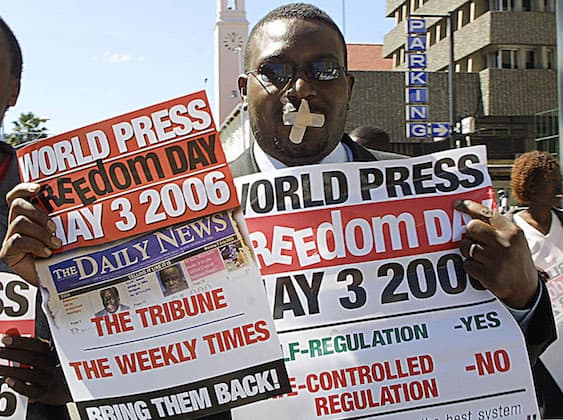
Press freedom is under threat in parts of Africa and journalists and media practitioners continue to face various social, economic, political and legal impediments which affect how they operate. A culture of impunity and intolerance to difference in opinion continues to affect press freedom, both in the mainstream media and alternative platforms.
There have been numerous attacks made on media practitioners over the past year, such threats, arrest of media workers and attacks are a blatant assault on press freedom and freedom of expression.
Globally, press freedom has continued to decline and according to reports, in 2015 press freedom dropped to its lowest in more than a decade. A number of African countries have shown promising signs in the fight for media freedom and press freedom has steadily progressed in these countries, marked by a significant drop in threats and intimidation against journalists.
The 2016 Reporters Without Borders Index, which analyses the environment in which journalists work and the degree to which the media functions independently of the authorities indicates that while some African countries continue to show progress, there are laws which are still being used to restrict access to information and freedom of information. These various cases of threats and intimidation of media workers do not make for a good reading.
According to Reporters Without Borders Index, three African countries are ranked in the bottom ten, in a category where press freedom is perceived precariously low. These include Eritrea, which is ranked at the bottom of the list (180), Sudan (174), and Djibouti (172) respectively. Somalia, Libya, Rwanda, Burundi, Swaziland, the DRC and Egypt and all ranked in the bottom thirty.
However, its not all gloom and doom, as other countries have recorded significant improvements in promoting media freedom and a vibrant media environment.
The top ranked African country, where press is perceived highest is Namibia, ranked 17th globally. Ghana (declined from previous year), Cape Verde, South Africa, Botswana and Mauritania made it into the top 50, spurred on by a significant decline in attacks and intimidation of journalists.
Cognisant of the prevailing challenges, and inline with the World Press Freedom Day objective to remind governments to respect and uphold the right to freedom of expression, more needs to be done. It is imperative that journalists, media workers and civic groups continue fighting for media reforms and the right to access to information.
The protection of media workers should continue to be valued because of the important role they play in promoting accountability, transparency, development and good governance.
Source: RWB