
Politics and Society
A mirror across the Zambezi: Why Zambia’s August 13 vote matters to Zimbabwe and SADC
Zambia’s August 2026 presidential election stands as a vital geopolitical watershed for Southern Africa. Strikingly contrasted against Zimbabwe’s executive overreach and eroded voting rights, Lusaka’s ballot presents a critical test: whether SADC’s future will be defined by constitutional accountability and fiscal reform or liberation-era nostalgia.

Published
3 months agoon
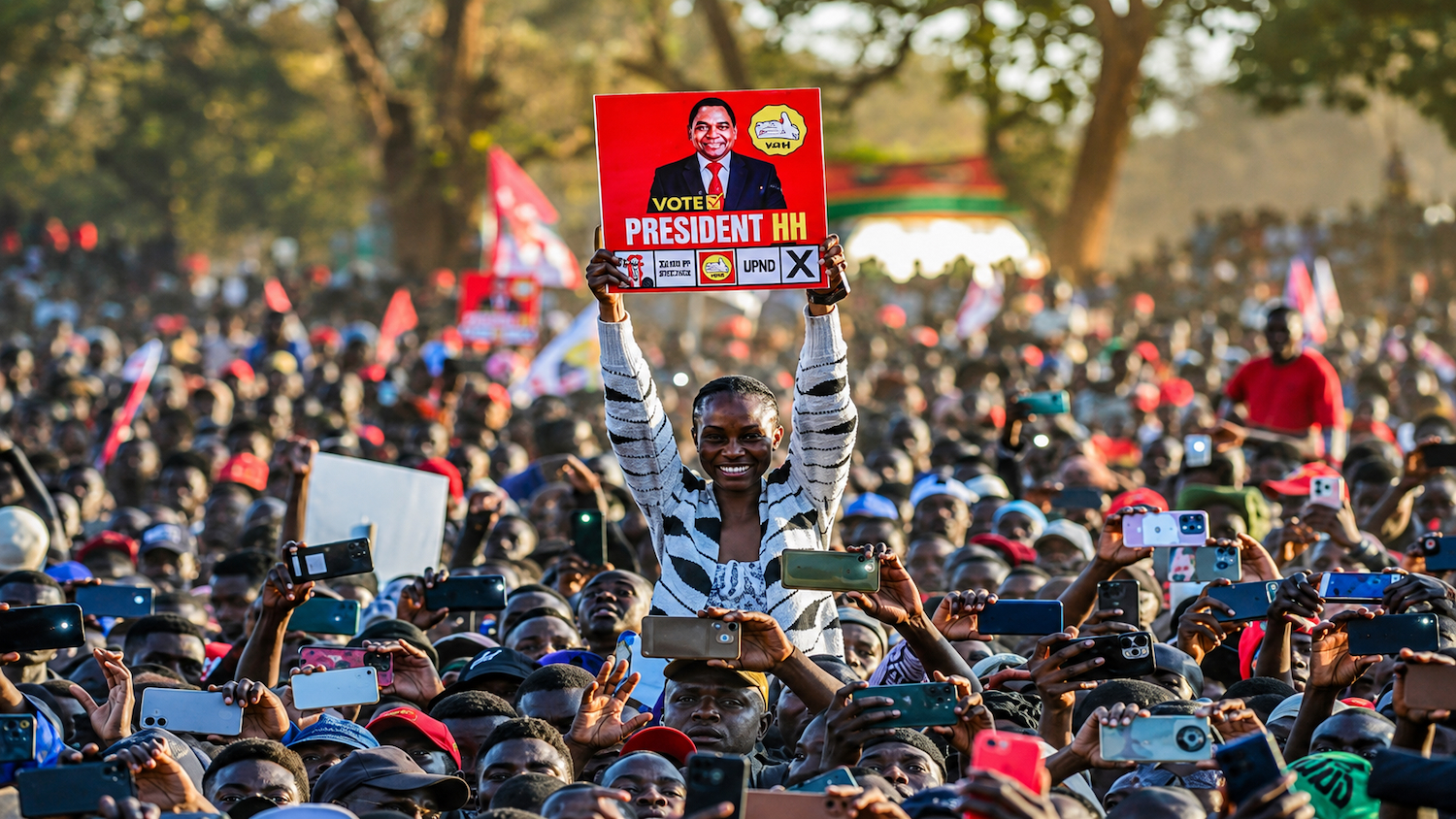
On August 13, 2026, Zambians will walk into voting booths across the country, but the quiet moment when a voter marks their ballot in Lusaka or Kasama will resonate far beyond Zambia’s borders. From the bustling Chirundu border post to the streets of Harare, Pretoria, and Gaborone, this election is a watershed moment for all of Southern Africa. The outcome will shape not only Zambia’s future but also the political and economic trajectory of the wider region.
The election is more than a contest for political office. It is a test of whether Southern Africa can consolidate democratic governance, sustain economic reform, and build resilience in the face of mounting debt, climate change, and geopolitical competition. For us in Zimbabwe, Zambia is far more than a neighbouring state; it is our mirror, reflecting both our shared struggles and our possible futures.
Our connection runs deep into history. We share a common colonial past bound together during the days of the Federation of Rhodesia and Nyasaland—when Zambia was Northern Rhodesia, and Zimbabwe was Southern Rhodesia. Beyond shared administrative borders, Zambia served as the bedrock of Zimbabwe’s liberation struggle. During our darkest days under minority rule, Zambia opened its arms and sheltered Zimbabwean freedom fighters. Training camps such as Mkushi, Freedom Camp, and Solwezi remain enduring symbols of Zambia’s contribution to Zimbabwe’s liberation struggle. Because of that shared history and destiny, what happens in Zambia will always matter deeply to Zimbabwe.
Yet at the state-to-state level, diplomatic relations between Harare and Lusaka have hit their lowest ebb in decades. The rift opened when President Hakainde Hichilema’s UPND defeated the Patriotic Front (PF)—a party with deep ideological and political ties to ZANU-PF. Relations deteriorated sharply when President Hichilema, acting as SADC Organ Troika Chairperson, appointed Dr. Nevers Mumba to head the SADC Election Observer Mission (SEOM) for Zimbabwe’s 2023 harmonised elections. When the SEOM preliminary report cited significant irregularities and declared the polls inconsistent with regional standards, ZANU-PF launched a fierce campaign against Hichilema and Mumba, labelling them Western puppets seeking to destabilise Zimbabwe and the subcontinent. State media narratives routinely targeted the UPND administration, while reports surfaced of ZANU-PF backing the political comeback of the late President Edgar Chagwa Lungu. ZANU-PF even attempted to mobilise former liberation movements across SADC to isolate Zambia diplomatically. This election has therefore become a geopolitical contest over the future direction of SADC—whether regional politics will continue to be shaped primarily by liberation movement solidarity or increasingly by institutional accountability, constitutionalism, and democratic norms.
That historical mirror has become strikingly clear following Zimbabwe’s enactment of the Constitution Amendment (No. 3) Act. By extending President Emmerson Mnangagwa’s term with two more years and replacing direct popular elections for the presidency with selection by Parliament, Zimbabwe deepened a regional trend toward executive consolidation and the erosion of civic power. The contrast across the Zambezi River could not be sharper. As ordinary Zimbabweans watch their right to directly elect a head of state legislated away, Zambia’s election stands out as one of the few remaining direct presidential ballots in our immediate neighbourhood where voters still hold the ultimate power to keep or change their leadership through the ballot box.
That shared reality is visible in the daily lives of ordinary citizens. When water levels at Kariba Dam fall, households and businesses on both sides of the Zambezi feel the impact. The lights go out in a barber shop in Kalingalinga, Lusaka, just as they do in a salon in Glen View, Harare. A welder in Ndola confronts many of the same challenges as a manufacturer in Southerton: unreliable electricity, climate-induced droughts, rising food prices, and youth unemployment.
In 2021, Zambia chose a difficult but disciplined path of debt restructuring, fiscal transparency, and engagement with international creditors. Rather than remaining an abstract macroeconomic exercise, these reforms freed up resources for the Constituency Development Fund (CDF), supporting the construction of maternity wards in rural clinics, the purchase of school desks in communities such as Choma and Chipata, and helping to restore investor confidence.
For Zimbabweans, the contrast is instructive. Communities from Binga to Chipinge continue to struggle with deteriorating roads, under-equipped clinics, and unreliable electricity. While the contexts differ, both countries face the same question: how can limited public resources be managed to deliver visible improvements in citizens’ lives?
Today, the opposition under Brian Mundubile and the National Reconciliation Party for Unity and Prosperity (NRPUP) promises a return to the policies of the late President Edgar Lungu. Such a course would mean a return to non-transparent borrowing, unpaid local contractors, default, and a crushing US$17 billion debt crisis. If Zambia abandons fiscal reform now, international lenders may question the durability of economic reform in the region, increasing borrowing costs for neighbouring governments and businesses seeking investment.
Beyond economics, this election tests the strength of democratic transfer in a region where political space is rapidly shrinking. In 2021, Zambia reminded SADC that a peaceful transfer of power to an opposition party was entirely possible without plunging a nation into violence. August 13th is the re-election test of that model. If Zambians vote based on policy and track records rather than anger or political rhetoric, it solidifies democratic norms across the entire region. For Zimbabwe, Malawi and Mozambique, Zambia’s election offers an important regional benchmark. As countries across Southern Africa continue to debate electoral reforms, institutional independence, media freedom, and democratic accountability, a credible election in Zambia strengthens regional expectations that political competition should be peaceful, transparent, and constitutional. Conversely, instability or disputed outcomes would weaken democratic norms across SADC.
Cross-border traders travelling through Chirundu, Victoria Falls, Livingstone and Beitbridge understand this interdependence better than anyone. Exchange-rate volatility, customs delays, rising fuel costs, or policy uncertainty in one country quickly affect prices, profits, and livelihoods across the border. For many informal traders and transport operators, regional integration is not an abstract policy objective—it is the difference between making a living and going home empty-handed. Campaigning on emotion rather than credible policy proposals creates uncertainty that ultimately hurts businesses and households on both sides of the border.
Beyond economics and elections lies a deeper question of dignity and political culture. The mortal remains of former President Edgar Lungu have tragically become the centrepiece of the campaign trail. Key figures among former Patriotic Front ranks, including Brian Mundubile and Makebi Zulu, have actively capitalised on this unfortunate circumstance. Even after a South African court ruled that the Lungu family holds the legal right to lay the former head of state to rest at a place of their choice, there appears to have been a concerted effort by some political actors to use his burial to mobilise political sympathy and electoral support for the NRPUP.
President Hakainde Hichilema and the Zambian government indicated their willingness to accord the former head of state full military honours in keeping with regional custom. Yet when a family’s loss becomes an electoral weapon, statecraft loses its dignity.
When personal grief becomes a campaign strategy, democratic politics is diminished. Zimbabwe offers its own lesson. The disputes surrounding former President Robert Mugabe’s burial in 2019 illustrated how the legacy of national leaders can become entangled in contemporary politics. Such episodes remind us that democratic maturity is measured not only by how societies elect leaders, but also by how they honour them after they leave office. How a society honours its past leaders reflects directly on how it values its living citizens.
Ultimately, this election poses three fundamental questions for voters in Zambia and citizens across SADC: Will we choose credible plans over temporary anger, recognising that while anger fills rallies, only a clear strategy builds a country? Will we choose credible solutions over nostalgia, recognising that yesterday’s politics cannot solve today’s challenges? And will we protect hard-won progress, understanding that while economic reform is demanding, reversing course is far more painful?
Zambia’s election reminds us that in an interconnected Southern Africa, no democracy exists in isolation. The choices citizens make in one country inevitably influence the opportunities and challenges facing its neighbours.
On 13 August, Zambians will choose their next government. They will also send a message about the future of governance, economic reform, and democracy in Southern Africa. For Zimbabwe, the election is a reminder that our destinies are intertwined. Our rivers, power stations, trade corridors, and shared history bind our futures more closely than national borders sometimes suggest. Political choices made in Lusaka inevitably shape realities in Harare. Zambia’s vote is therefore not merely a national event but a regional moment. When Zambia succeeds, Southern Africa is stronger. When Zambia falters, its neighbours inevitably feel the consequences.
About the Author
Dr. Blessing Vava is Executive Director of the Southern Africa Coalition for Democracy and Accountability (SACDA) and a public policy researcher specialising in African democracy, digital governance, and political economy. He writes in his personal capacity and can be contacted at blessingvava@gmail.com
You can follow his blog The Vuvuzela Times
This article was first published by Dr Blessing Vava and it is published here with permission of the writer.
Follow This Is Africa on Twitter and Facebook to join the conversation.
You may like


Infrastructure before enforcement: Why Kenya’s speed camera ambush breaks the social contract


Maputo to Host 2026 All-African Movement Assembly for Activists & Human Rights Defenders


The passport, the database and the State: Who controls digital Zimbabwe?


When the Algorithm decides what we see: Who governs Africa’s digital democracy?


Zambia 2026: Beyond the ballot did SADC duck the election crisis? (SAPES Dialogue forum presentation)


Democracy in code: How digital power is reshaping sovereignty in Africa