
Politics and Society
The 1953 original sin: How a coup in Iran engineered 70 years of global resource wars
The geopolitical crises of 2026—from the devastating US-Israeli war on Iran to the conflict in Ukraine and Africa’s scramble for critical minerals—are not isolated events. Instead, they are the direct blowback of a single historical pivot point: the 1953 Western-backed overthrow of Iranian Prime Minister Mohammad Mossadegh.

Published
4 months agoon
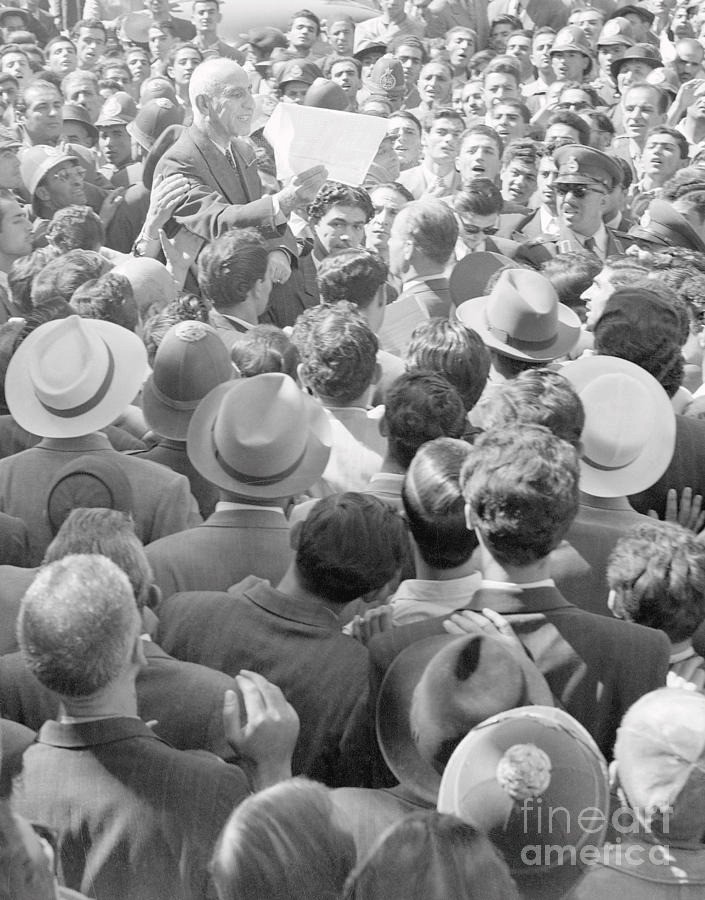
The geopolitical fault lines of 2026, from the Gulf war to the war in Ukraine and the fierce scramble for Africa’s critical minerals, do not exist in a vacuum. They are the direct, structural descendants of a single historical pivot point: the August 1953 overthrow of Iranian Prime Minister Mohammad Mossadegh.
What happened in Tehran over seventy years ago was not just a regime change; it was the creation of a global playbook. It proved to Western intelligence agencies that they could cheaply and covertly remove foreign leaders who threatened corporate resource monopolies, provided they wrapped the intervention in the narrative of a global threat.
To understand today’s multipolar resource wars, we have to look at the original sin of 1953.
The Original Sin: A Community-Centered Iran
Mohammad Mossadegh’s brief tenure as Iran’s Prime Minister (1951 to 1953) represented a radical shift from extractive colonial economics to a system rooted in collective wellbeing. He viewed the nation’s resources not as commodities for foreign profit, but as a shared inheritance meant to uplift the broader community.
His policies systematically dismantled the colonial status quo. He reclaimed Iran’s petroleum industry from the British-owned Anglo-Iranian Oil Company (now British Petroleum or BP), which had previously siphoned immense wealth while leaving Iranian refinery workers in slums. Using emergency powers, he forced wealthy absentee landlords to surrender twenty per cent of their rental revenues, sending half directly to sharecroppers and routing the other half into local cooperative projects for rural housing, public baths, and safe drinking water. He abolished forced, unpaid peasant labour and established genuine social safety nets, mandating unemployment and injury benefits for factory workers.
For the British Empire, this community-centered governance was an intolerable disruption to their economic engine.
The Propaganda Blueprint: Operation Ajax
Unable to force Mossadegh out through a devastating global oil embargo alone, MI6 and the CIA, under the Eisenhower administration, orchestrated Operation Ajax. To dismantle Mossadegh’s government, they had to destroy the narrative that he was a champion of the people.
They deployed a masterclass in psychological warfare and narrative manipulation. Despite Mossadegh being a non-aligned aristocrat, the CIA relentlessly linked him to Iran’s communist Tudeh party, convincing the West and Iran’s middle class that his democratic tolerance was a stepping stone to a Soviet takeover. Through black propaganda, the CIA staged fake bombings on mosques and forged threats against prominent clerics, framing Mossadegh as an anti-Islamic atheist to shatter his alliance with Shi’ite leaders. The CIA hired street gangs and local mobsters to smash shop windows and beat pedestrians in Tehran’s bazaars while chanting pro-Mossadegh slogans, manufacturing an artificial anarchy that allowed the military to step in looking like saviours rather than coup plotters. Western media, heavily influenced by intelligence agencies, abandoned policy debates to attack Mossadegh’s character, painting him as hysterical, irrational, and dictatorial.
Exporting the Playbook: Latin America and Africa
Operation Ajax was so successful that it became the template for crushing pro-people resource policies across the Global South.
Just a year later, in 1954, the CIA launched Operation PBSuccess in Guatemala, overthrowing President Jacobo Árbenz after he implemented land reforms that threatened the US-owned United Fruit Company. He was labelled a communist beachhead.
In Africa, the playbook was deployed against Patrice Lumumba, the first democratically elected Prime Minister of the DR Congo. In 1961, Lumumba sought to keep the immense wealth of Katanga province, uranium, copper, and cobalt, under Congolese control rather than European mining conglomerates. Framed as a Soviet sympathizer, he was assassinated in a plot orchestrated by Belgian intelligence and the CIA, plunging the nation into decades of dictatorship. In 1973, the CIA backed the coup against Chile’s Salvador Allende after he nationalized the US-dominated copper industry.
The 2026 Blowback
The legacy of 1953 is not historical memory; it is the structural foundation of the 2026 geopolitical landscape. The tactics have evolved, but the core conflict remains: resource sovereignty versus foreign extraction.
The Gulf: The Ghost of 1953
The US-Israeli war on Iran that erupted on February 28, 2026, under the American code name Operation Epic Fury, is fundamentally rooted in this historical trauma. The opening strike killed Supreme Leader Ali Khamenei within hours, a level of overt decapitation the architects of 1953 never needed and never dared. The 1953 destruction of Iran’s secular democracy birthed the narrative of the US as the “Great Satan,” leading to the 1979 Revolution. Iran’s refusal to integrate into Western financial systems, relying instead on shadow fleets to move oil and, by 2026, on Chinese yuan to settle tolls at the Strait of Hormuz itself, stems from the historical lesson that Western economic integration guarantees a loss of sovereignty.
Same War, Twice
History does not usually rhyme this precisely. In October 1973, Egypt and Syria struck first, against Israel, and Richard Nixon was drawn in, authorizing an airlift, Operation Nickel Grass, that armed Tel Aviv against its attackers. Arab oil producers punished the resupply with an embargo that targeted not just Washington and London but also Lisbon, Salisbury, and Pretoria, a reminder that the 1973 oil weapon was aimed at colonial Portugal and apartheid South Africa as much as at Israel’s backers. In February 2026, the order reversed. The United States and Israel struck first, against Iran, and Tehran retaliated not against the countries that armed it but against the Strait of Hormuz itself, the chokepoint a fifth of the world’s oil has to pass through. Attacker and attacked traded places across half a century, but the chokepoint did what chokepoints always do. The International Energy Agency called the resulting disruption the largest in the history of the global oil market. Brent crude blew past $120 a barrel. Analysts began talking about $200. Fuel panic reached as far as Hanoi, and parts of Africa, no party to the war and no beneficiary of it, felt the shortage within weeks.
The men in office both times invite the same uncomfortable question. Nixon fired his own special prosecutor in the middle of the 1973 war, a president fighting two crises at once, and historians still argue over how much of his crisis management was strategy and how much was a wounded man needing to look strong. Trump launched Epic Fury while the Epstein files scandal metastasized through his own Justice Department, and a majority of voters polled, Republicans included, told pollsters they suspected the timing was not a coincidence. The internet renamed his war Operation Epstein Fury before the ink on the briefing papers was dry. Trump had, in fact, already written this playbook himself a decade earlier, when he accused Obama of planning to do exactly this. Whether either man’s motives were what critics suspected is unprovable and beside the point. What’s provable is the chokepoint, the price, and the fact that Africa pays for both wars in fuel queues and tax conditionalities regardless of who is right about why they were fought, or who struck first.
The IMF & World Bank Built From the Wreckage
The reconfiguring of Bretton Woods had begun two years before the 1973 war, when Nixon closed the gold window in a single televised address, on which nobody outside Washington was consulted. By the time Egypt and Syria crossed into Sinai and the Golan, the dollar was already backed by nothing but trust. The war forced an answer to the question that had been left open: now that oil-producing governments were suddenly holding far more dollars than they had use for, what would hold the system together?
In June 1974, Henry Kissinger and Treasury Secretary William Simon reached an understanding with Riyadh. No single treaty has ever surfaced laying out every term, and that gap is worth stating plainly rather than papering over, but the outcome isn’t in dispute: Saudi oil would be priced in dollars, the rest of OPEC would follow, and the surplus would flow back into US Treasuries, American military hardware and security guarantees flowing the other way. Every country on earth that needed oil now needed dollars to buy it, whether or not it traded with Washington at all. The IMF then formalized what had already happened in practice, opening an emergency oil facility to help the oil-importing countries of the Global South cover the gap the embargo had blown in their accounts, and in January 1976 rewriting its own Articles of Agreement in Kingston to legalize the floating rates the system had been running on illegally since 1971. Mossadegh wanted Iranian oil priced and controlled on Iranian terms. What stood by 1976 was the opposite: oil priced in dollars everywhere, the dollar backed by nothing but the world’s need for that oil, and the institution meant to police the system having just rewritten its own charter to make the arrangement permanent. It is also the precise architecture that handed the Fund the leverage it would use against Accra, Lusaka, and Nairobi within the decade, once Volcker turned the petrodollar surplus into the debt trap that follows.
Fifty years on, the arrangement is fraying at the same strait where the next war just broke out. Saudi Arabia is reported to have quietly let the 1974 understanding lapse around 2024. Iran, on the other hand, was reportedly collecting Hormuz transit tolls in Chinese Yuan.
From Bullets to Balance Sheets
By the late 1970s, the crude tools of 1953 had become a liability of their own. The Church Committee hearings had dragged Operation Ajax, PBSuccess, and the Congo plot into open Senate testimony, and a Western public that had absorbed Watergate was no longer willing to look away from staged riots and forged threats against clerics. The empire needed a mechanism that could achieve the same outcome, control over who sets the price and the terms on a country’s resources, without a single visible foreign hand. The petrodollar surplus the previous section describes gave it one.
The 1973 and 1979 oil shocks left Western banks flooded with the same petrodollars Riyadh was recycling through them, and they lent the surplus to African and Latin American governments on easy terms. Then, in 1979, US Federal Reserve Chairman Paul Volcker drove interest rates into the high teens to fight American inflation, and overnight the debt that Lagos, Lusaka, and Accra had taken on at variable rates became unpayable. African governments did not engineer this trap. Washington’s own monetary policy did. What followed was not a loan workout, it was a conditionality regime. The IMF and World Bank would release financing only if governments accepted Structural Adjustment Programs: currency devaluation, removal of subsidies on food and fuel, privatization of state enterprises, trade liberalization, and cuts to health and education spending, mandated from outside and administered through Letters of Intent signed by finance ministers who had been elected on entirely different platforms.
The targets of privatization were rarely random. Zambia’s state copper company, ZCCM, was sold off piecemeal through the 1990s under World Bank pressure, just years before global copper prices began their long climb, handing away sovereignty over exactly the kind of resource wealth Mossadegh had nationalized oil to protect. Ghana’s 1983 Economic Recovery Programme, held up by the Fund as the model African adjuster, drove a decade of falling real wages under the weight of cedi devaluation and subsidy withdrawal. Kenya’s own cost-sharing regime in health and education, introduced under Moi from the late 1980s, hollowed out the Nyayo-era state one conditionality at a time, each new loan tranche arriving with a fresh demand attached.
UNICEF’s own 1987 research, Adjustment with a Human Face, found measurable harm to child health and education outcomes across the adjusting countries, an institutional admission buried in a development report rather than a headline. The IMF and World Bank have spent the decades since renaming the mechanism rather than abandoning it. Structural adjustment became fiscal consolidation, which became structural reform, always described as a technical, apolitical, country-owned partnership. No general is installed. No coup is announced. A press release goes out about unlocking growth, and a government that won an election on one promise governs on another written for it elsewhere.
The mechanism is alive in Nairobi right now. For nearly two years, the Fund has pressed Kenya to close its fiscal gap through new taxes and spending cuts under what it calls fiscal consolidation, and critics have traced contentious Finance Bill 2026 provisions directly to that pressure. The IMF has separately instructed the government to classify roughly 335 billion shillings raised through securitized future tax revenue as public debt, a dispute over whether Ruto’s signature infrastructure financing model is what it claims to be. This is the same logic that hollowed out the Moi-era state, run through a finance ministry instead of a foreign hand, with a domestic official left to explain austerity he did not originally author.
And when the institutions insist they are neutral technocrats rather than political actors, the World Bank president’s own conduct argues otherwise. Ajay Banga’s participation on Donald Trump’s Board of Peace for Gaza reconstruction has drawn governance concerns from within the development community itself, over whether it blurs the Bank’s claimed separation from overtly political initiatives. An institution that sits on a US president’s geopolitical board while insisting its African lending is purely technical is not hiding the contradiction well.
This is the precise inversion of Utu. Mossadegh’s twenty percent land reform took resource wealth and routed half of it straight back into the community, wells, baths, housing for the people who produced the wealth in the first place. SAP-era conditionality runs the wealth the other way, out toward debt service, and calls the resulting hunger adjustment. Utu/Ubuntu (Umuntu ngumuntu ngabantu, mtu ni mtu juu ya watu) demands that wealth circulate back into the dignity of the collective. The Fund’s model demands it circulate outward and asks the collective to absorb the cost quietly. So, when the IMF and the World Bank say they are not in the business of removing African sovereignty over resources, the honest answer is that they no longer need to be. Volcker did the removing once, in 1979, and the institutions have simply administered the result ever since. The mob in the bazaar became the bond market. The staged coup became the missed quarterly review. The case officer became the resident representative. Same blueprint, paperwork instead of paramilitaries.
Ukraine and the Authoritarian Loop
The weaponization of resources that defined the Cold War has returned. Excluded from the US-dominated financial system, Russia and Iran have formed a tight, closed-loop resource partnership. Russia has spent the 2020s arming Tehran in exchange for the Shahed drones and ballistic missiles that have sustained its war in Ukraine. Confirmed transfers include Mi-28 attack helicopters, Yak-130 training jets, and a roughly half-billion-euro Verba MANPADS contract signed in December 2025, while a long-rumoured Su-35 fighter deal remains, as of the 2026 war’s outbreak, unconfirmed. Crucially, the two states are increasingly bypassing the SWIFT system, building alternative financial transfer networks using the Chinese Yuan to insulate their resource trade from Western sanctions, the same Yuan Iran was reportedly collecting at Hormuz tolls within weeks of the strait’s closure.
Africa’s New Scramble
The global energy transition requires vast amounts of lithium, cobalt, and copper, resources heavily concentrated in Africa. However, unlike the 1960s, African nations in 2026 are refusing the old colonial model of exporting raw dirt.
Under South Africa’s G20 presidency, with the African Union sitting at the table as a full G20 member for the first time, the G20 adopted a Critical Minerals Framework at the November 2025 Johannesburg Summit. Its stated goal echoes exactly what Mossadegh demanded in 1951: sovereignty over the value of one’s own soil, value addition and local beneficiation rather than raw export. But the framework is, by design, voluntary and non-binding, a blueprint rather than a mandate, which means the sovereignty it gestures toward has not yet been won so much as requested. While the US funds the Lobito Corridor and China dominates refining, African states now have, at minimum, a rhetorical platform and growing leverage to play the remaining superpowers against each other. Whether that leverage becomes enforceable is the open question 1953 should make everyone here treat with suspicion rather than relief.
Seventy-three years after the fall of Mohammad Mossadegh, the playbook has not fractured so much as it has sorted its targets by leverage. States with no military deterrent and deep dependence on dollar-denominated trade and IMF facilities get the soft instrument: conditionality, fiscal consolidation, a voluntary framework instead of a binding one. States that built a deterrent and refused the dollar get Khamenei dead in the opening hours of a war with a name nobody bothered to disguise as anything but what it was. The fight for resource sovereignty has gone global, and across Tehran, Nairobi, and Lusaka the Global South is no longer pretending the 1953 blueprint is history. The open question is whether refusing to accept it is the same thing as having the power to refuse it.
Follow This Is Africa on Twitter and Facebook to join the conversation.
You may like


The passport, the database and the State: Who controls digital Zimbabwe?


Zambia 2026: Beyond the ballot did SADC duck the election crisis? (SAPES Dialogue forum presentation)


Democracy in code: How digital power is reshaping sovereignty in Africa


Zambia at a crossroads: Preserving democracy beyond the ballot


The third global wave of autocratization One playbook, two instruments: Legal façades and structural decay in the world, with Indonesia and Kenya as case studies


Zambia’s opposition did not lose this election on the campaign trail. It lost it at the nomination desk