
Politics and Society
The architecture of extraction: From colonial famine to the mortgaged Kenyan pay slip
Historical famines under British rule were never accidental; they were engineered via systematic extraction. Today, that colonial machinery thrives in Kenya. Replacing land theft with sovereign debt, the Ruto administration’s securitization of the Affordable Housing Levy collateralizes future generations’ labor for foreign creditors. This modern exploitation breaks the African philosophy of Utu (human dignity), sparking a reborn, youth-led liberation.

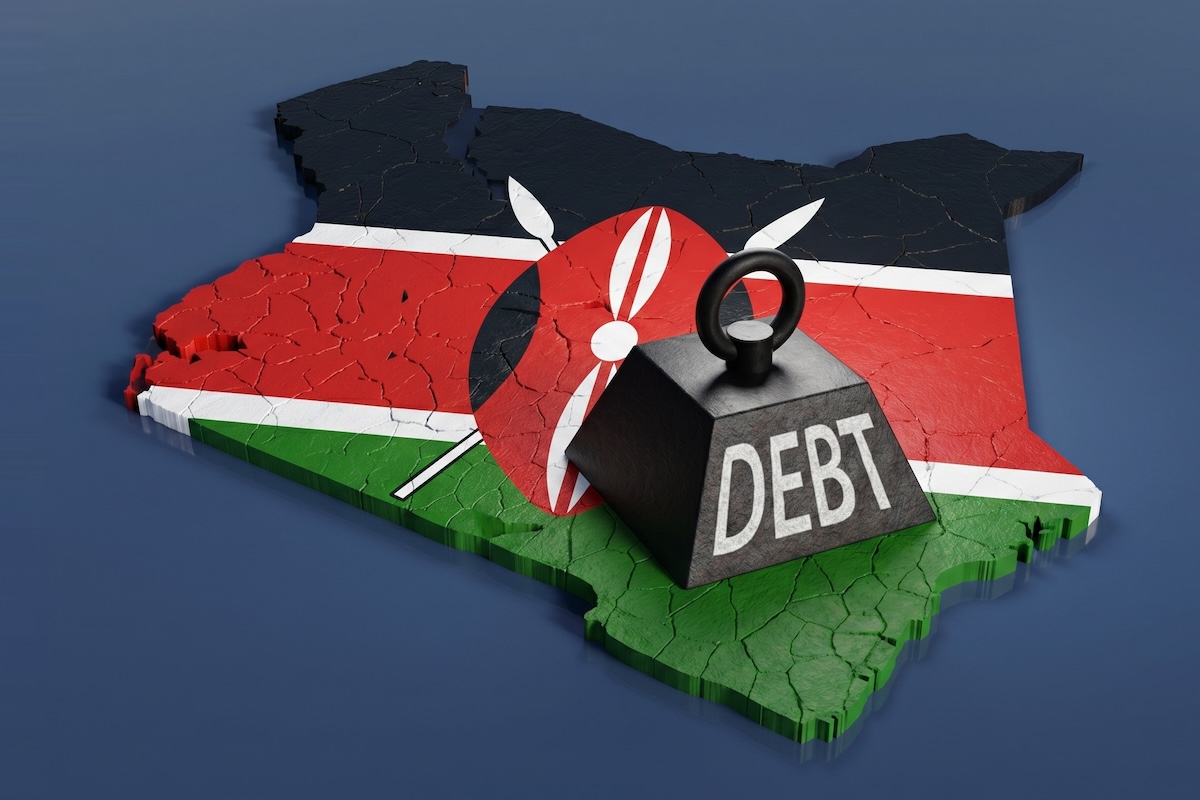
When we think of famine or economic collapse, we often picture a failure of nature or a sudden local crisis. But historical famines under British colonial rule, much like the crushing debt crises of the modern era, were rarely accidental. They were engineered.
From the potato fields of 19th-century Ireland to the plains of India, and eventually to the highlands of Kenya, a remarkably consistent blueprint of extraction was deployed. Local food sovereignty was dismantled, communal wealth was privatized, and entire economies were reorganized to serve foreign markets. Today, that century-old machinery continues to operate in Kenya. The colonial master has simply been replaced by the invisible hand of global creditors, and the theft of land has evolved into the theft of the future of Kenyans through sovereign debt and punitive taxation.
But the machinery has now acquired a new gear under Ruto’s colonial governorship. Through the proposed securitization of the Affordable Housing Levy, the current administration is not merely taxing Kenyans today. It is collateralizing their labour into the future, binding the pay slips of workers not yet in the workforce to debts they had no hand in creating. This is not just kicking the can down the road to manage Kenya’s massive debt. This is mortgaging the can itself.
The Blueprint of Starvation
The mechanics of this extractive economy were beta-tested in Ireland during the 1840s. The Great Hunger is often blamed on a potato blight, but British land policies caused the starvation. Native Irish farmers were pushed onto marginal plots and forced to grow cash crops‚ wheat and oats, to pay steep rents to Anglo-Irish elites. When the blight hit, the Irish had nothing to eat, yet Ireland continued to export massive quantities of grain and livestock to England. The free market was prioritized over starving peasants, leaving a million dead.
By the late 19th and early 20th centuries, this logic was scaled across the Indian subcontinent, resulting in an estimated 30 to 40 million deaths. The British Raj dismantled pre-colonial drought reserves and communal safety nets. Millions of farmers were heavily taxed and coerced into abandoning drought-resistant subsistence crops like sorghum for lucrative export commodities like indigo, cotton, and jute. During the Great Famine of 1876 to 1878, the newly built railway network was used to rush grain out of famine-stricken regions to ports for export, even as people starved alongside the tracks.
The through-line is not incompetence or neglect. It is a system working precisely as designed: extract, export, and let the cost fall on those with no power to refuse.
Kenya: The White Highlands and the Hut Tax
When the British established the East Africa Protectorate, they imported this exact playbook to Kenya. To make the colony financially self-sustaining, they needed the best land and cheap African labour.
Through legislation like the 1915 Crown Lands Ordinance, the British alienated indigenous populations — particularly the Kikuyu, Maasai, and Kalenjin — from the most fertile, well-watered regions. These became the White Highlands, reserved exclusively for European settlers. Africans were confined to overcrowded, ecologically fragile Native Reserves, stripping pastoralists of their mobility and causing rapid soil degradation.
But land theft was not enough. The administration needed labour for their coffee and sisal estates. They introduced the Hut Tax and Poll Tax, levied in colonial currency, which African men could only obtain by leaving their farms to work for white settlers. The labor drain and the shift toward cash crops shattered local food security. When droughts hit in the 1920s and 1930s, the resulting famines were the direct consequence of a population stripped of its land and forced into a precarious cash economy.
The genius of this machinery was its self-reinforcing nature. The tax created the need for wages. The need for wages created the labour supply. The labour supply built the settler economy. And the settler economy demanded ever more tax revenue, completing the loop.
The Destocking Lie: When Conservation Was a Weapon
But the British were not finished. Having taken the land and taxed the labour, they turned next to the one remaining asset that kept African communities economically independent: their livestock.
For the Kamba of Machakos and the pastoralist communities of the Rift Valley, cattle were not merely animals. They were savings accounts, insurance systems, and the currency through which marriages were negotiated, alliances cemented, and social standing measured. A family’s herd was its wealth, its dignity, and its independence. That independence was precisely the problem.

In 1938, Governor Robert Brooke-Popham launched what was officially called a destocking program across the Machakos reserve. The stated justification was environmental: the government’s chief soil conservation officer, Colin Maher, declared that Kamba cattle were causing overgrazing and land degradation. The Carter Land Commission endorsed the recommendation. It sounded like science. It was not.
The actual mechanism revealed the true purpose. Kamba households were surveyed, individual stock limits were imposed, and any cattle deemed “excess” were required to be sold, at prices between a quarter and half their market value, to a private British company called Liebig’s, which operated a meat canning factory at Athi River. More than 20,000 cattle were sold or confiscated by July 1938. The colonial government was not saving the land. It was liquidating African wealth into settler profit, under conservation cover.
The colonialists sabotaged the Kamba economy precisely because cattle-based wealth made the Kamba people disobedient
The Kamba understood this immediately. As one account put it, they believed the colonialists wanted to sabotage their economy precisely because cattle-based wealth made them disobedient. Strip that wealth, and you strip the resistance.
They were right. But they also pushed back.
A former colonial police officer named Samuel Muindi Mbingu left his post and began organizing. He and his colleagues in the Ukamba Members Association mobilized 2,000 people from Ngelani and Koma Rock, who walked 60 kilometres to Nairobi and camped at Kariokor for a month, demanding an audience with the Governor. The protest drew coverage in The Times, the Telegraph, and the Manchester Guardian. The Governor eventually agreed to end compulsory cattle sales, then had Muindi Mbingu arrested and deported to Lamu Island for seven years.
His crime, in the formal record, was speaking to the Governor in Kikamba rather than English. What he said was this: “Twenda kwikala ta maau mau maitu, tuithye ngombe ta maau mau maitu, nundu nthi ino ni ya maau mau maitu” — We want to live like our grandfathers, keep cattle like our grandfathers, for this land belongs to our grandfathers.
The colonial administration heard the words “maau mau”, our grandfathers in Kikamba, and assumed he was invoking a subversive movement. Some Akamba historians believe this is the actual origin of the name Mau Mau, the independence movement that would eventually contribute to forcing Britain out of Kenya altogether. A cattle rights protest, in other words, planted the seed of liberation.
Muindi Mbingu was eventually released, collaborated with the colonial government under duress, and was murdered in 1953 during the Emergency. Most Kenyans today do not know his story, even though one of the main streets in the Nairobi central business district, formerly named Stewart Street after a colonial official, was renamed in his honour. His story was buried, along with the lesson it contains.
The destocking policy continued long after 1938. During the Mau Mau Emergency in the 1950s, Governor Baring ordered a new wave of livestock confiscation from communities suspected of supporting the rebellion. By early 1954, tens of thousands of additional heads of cattle had been seized and were never returned. Punishment and profit, again dressed as policy.
The institutional ghost of Liebig’s meat canning factory lives on today in the Kenya Meat Commission. The extraction was so thorough, so structurally embedded, that even its successor institutions outlasted the empire that created them.
Kamba cattle became an “environmental conservation measure.”
The pattern that the destocking episode reveals is the most important thread running through this entire history: rename the thing you are taking, attach a technical justification, and extract. Irish grain exports became “free market operation.” Indian famine became “railway logistics.” Kamba cattle became an “environmental conservation measure.” Each time, the language of rational administration concealed an act of deliberate theft. Each time, the communities being robbed understood exactly what was happening, even if the official record did not say so. And each time, the extraction produced its own resistance.
The Modern Echo: Neocolonialism and the Cash Crop Trap
Kenya gained flag independence in 1963, but the economic architecture of extraction remained largely intact and has been improved upon since. The fundamental purpose of Kenya’s agricultural sector did not change; it was still designed to feed global markets, not its own people.
Today, hundreds of thousands of acres of Kenya’s most arable land and vast water resources are dedicated to growing export commodities — tea, coffee, cut flowers — for European supermarkets. Simultaneously, the country must import basic food staples like wheat and maize. This leaves the nation chronically exposed: when global fertilizer prices spike or the shilling weakens, local food inflation immediately becomes a crisis. The farmers growing roses for Amsterdam cannot feed their children with petals.
The New Hut Tax: Debt and Austerity
If the colonial engine was driven by the outright theft of land, the modern extractive machine runs on sovereign debt. And the burden of keeping this machine running has fallen entirely on the Kenyan citizen.
Under President Uhuru Kenyatta, Kenya’s public debt ballooned from Sh1.89 trillion to roughly Sh8.7 trillion, driven largely by opaque, debt-fueled infrastructure projects like the Standard Gauge Railway, built at inflated cost through Chinese state bank financing and to date failing to turn a profit. When President William Ruto took office, the debt continued its aggressive climb past Sh12 trillion, with the IMF projecting Kenya’s debt-to-GDP ratio reaching 71.6 per cent in 2026 and 72.4 per cent in 2027.

The construction of the Standard Gauge Railway in Kenya by the Chinese concessional loan which was undertaken by the China-Kenya contractors. Photo: KBC
To service this mountain of debt owed to local banks, Eurobond investors, Chinese state banks, and the IMF, the state turned to the only available pressure valve: aggressive taxation. Through successive Finance Bills, the administration rolled out an onslaught of levies targeting the basic cost of living — fuel, bread, cooking oil, and digital services — while imposing new mandatory deductions on worker paychecks through the Housing Levy and the Social Health Insurance Fund.
Today, the Kenyan government spends the vast majority of its collected tax revenue merely paying off past borrowing. Just like the colonial Hut Tax, these modern levies are not designed to build local capacity or fund public schools and hospitals. They exist almost entirely to extract local wealth and export it to satisfy foreign obligations.
Mortgaging the Pay slip: The Securitization Trap
Ruto’s administration has now introduced a mechanism more insidious than any Finance Bill clause: the securitization of the Affordable Housing Levy.
Here is what this means in plain terms. The State Department for Housing, led by Principal Secretary Charles Hinga, has proposed borrowing Sh100 billion against future Housing Levy collections to bridge a Sh118.3 billion funding gap in the 2026/27 budget. The lenders waiting on the other side of this arrangement are the Trade and Development Bank and Afreximbank. Both are African multilateral institutions — TDB is the financial arm of COMESA, Afreximbank a pan-continental export-import bank — and both carry a detail that has received almost no public scrutiny: Kenya is not merely a borrower in this arrangement. Kenya is a co-owner. The Ruto administration has injected $100 million of public money into TDB and $50 million into Afreximbank in the past year alone, explicitly to increase Kenya’s shareholding in both institutions. President Ruto has championed these injections publicly as proof of Kenya’s commitment to African-owned financial solutions, framing them at the COMESA Heads of State Summit as an alternative to the colonial architecture of the IMF and World Bank. He is now proposing to borrow against the future wages of Kenyan workers from the very institutions he has been capitalizing with Kenyan public funds. Kenya’s co-ownership stake does not make this borrowing cheaper for workers. It makes the circular nature of the arrangement harder to see, and harder to challenge. Worth noting too: China, whose state banks already feature prominently in Kenya’s existing debt burden, holds membership in both TDB and Afreximbank, with China Exim Bank among Afreximbank’s Class C shareholders.
Under this proposal, the 1.5 per cent deduction from every salaried Kenyan worker’s paycheck would be legally pledged as collateral for a bond. Future levy collections, from workers earning paychecks today, and from workers who have not yet entered the labour force, would be committed to repaying that debt. The Ruto administration would access the cash now. The obligation would be inherited by whoever comes after, and whoever comes after them.
When the Daily Nation asked PS Hinga whether the levy would remain in force even if a future administration sought to abolish it, he did not answer the question. The silence is the answer. Once a future revenue stream is securitized, it cannot simply be switched off without triggering a debt default. The deduction becomes, in effect, permanent.
The Parliamentary Budget Office noted as early as April 2025 that the housing initiative could be fully funded through existing tax revenues without a levy at all. That argument was set aside. The government collected the levy anyway and invested portions of it in Treasury bills, meaning it was loaned back to the same government, and now proposes to borrow against future collections. The affordable housing program has already consumed more development expenditure than roads, health, and education infrastructure combined, and only 3,611 houses of the proposed 250,000 per year had been completed three years down the line by October 2025.
What the Kenyan worker was told: your deduction will build you a home.
What the Kenyan worker was not told: your deduction has been parked in government securities, your future deductions will be pledged to foreign lenders, and the homes may or may not materialize while the debt certainly will.

Ruto’s administration has faced sharp domestic challenges. Photo: William Ruth Facebook Official.
This is not fiscal innovation. This is the oldest move in the colonial playbook: rename the thing you are taking, attach a technical justification, and extract. The Kamba were told their cattle were an environmental problem. The Kenyan worker is told their levy is a development asset. In both cases, what was actually happening was the transfer of community wealth into the hands of those with the power to write the policy. Governor Brooke-Popham funnelled cattle to Liebig’s at Athi River. PS Charles Hinga proposes to funnel future wages to TDB and Afreximbank. The distance between those two transactions is not as large as the century between them suggests.
The Death and Rebirth of Utu
To understand the cruelty of this system, it must be viewed against the foundational East African philosophy of Utu.
Utu is the essence of human interconnectedness, the belief that mtu ni mtu juu ya watu, I am because we are. It dictates that a society’s wealth is measured by the dignity and mutual care of its people, demanding that the collective protects its most vulnerable members, including those not yet born.
Kenya’s current economic model is fundamentally anti-Utu. When a state taxes the bread, digital services, and menstrual products of the poor to pay interest on loans that never benefited them, it strips them of their dignity. When it pledges the future wages of workers not yet born to service a debt contracted in an election cycle, it strips those workers of their agency before they have drawn a single breath of political air. The modern Kenyan taxpayer is treated not as a stakeholder in a sovereign nation, but as a biological extraction point — a human asset whose labour is harvested to balance an international spreadsheet, present and future.
This breaking point of dignity is not new in Kenya’s history. It is, in fact, the engine of every liberation movement this country has produced. Muindi Mbingu organized a cattle rights march because the British had taken the one asset that preserved Kamba independence. The Mau Mau fought because the land theft had left an entire people with nothing left to lose. In each case, the colonial administrators miscalculated: they assumed that stripping wealth would produce submission. It produced the opposite.
Kenya’s #GenZ and millennials who poured into the streets in 2024 and 2025, breached Parliament, and forced the retraction of punitive Finance Bills were operating in that same tradition, whether they knew it or not. Mobilizing outside traditional, elite-driven political machinery, they crowdfunded medical care for the injured, protected one another across ethnic lines, and refused to be managed. Utu. They were doing what the Ukamba Members Association did in 1938: naming the extraction for what it was, and saying no.
It was a generation recognizing that the structural dispossession begun by the British in the White Highlands had merely changed hands and changed instruments. Their resistance was a radical reclamation of Utu — a declaration that their humanity, their dignity, their wages, and their unborn children’s wages would no longer be sacrificed to feed the machine.
The question now is whether that generation understands that the fight has moved from the Finance Bill to the budget committee room, from the street to the securitization prospectus. The engineers of extraction are counting on the assumption that financial instruments are too technical, too boring, too distant from lived experience to provoke the same fury as a tax on bread.
They have underestimated this generation before!
Follow This Is Africa on Twitter and Facebook to join the conversation.


