
Politics and Society
The Converse Shock | How Disaster Capitalism Has Bankrupted the American War Machine
As articulated in Part 1, Naomi Klein mapped how power exploits crisis. The 2026 War on Iran reveals the mirror image: when an empire privatizes its own military strategy, the crisis eventually consumes its architects.

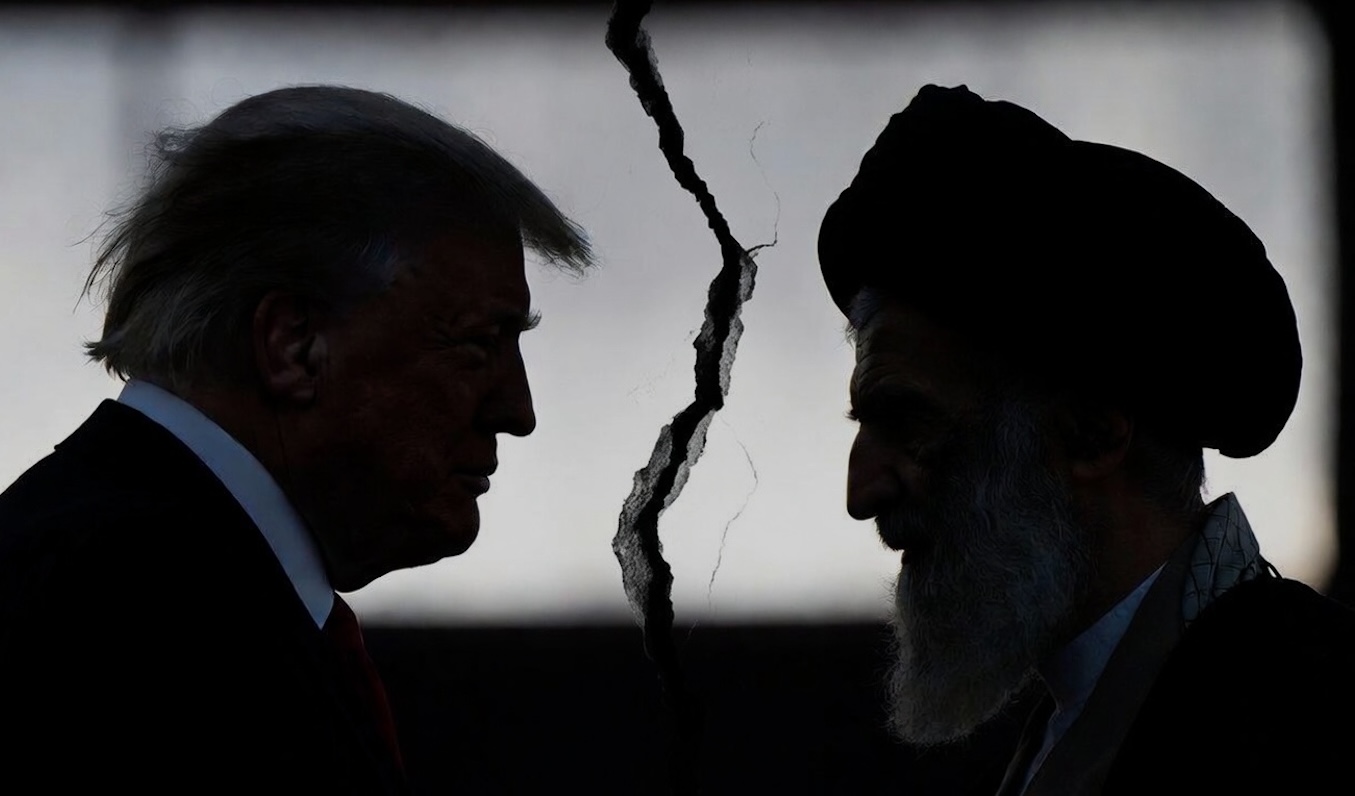
The Empire Eats Itself
Naomi Klein’s Shock Doctrine maps a ruthless geometry of power: architects of disaster capitalism use crisis, real or manufactured, to silence dissent, privatize public assets, and funnel wealth upward. In the opening salvos of the 2026 war on Iran, this playbook was executed with textbook precision. The US and Israeli political establishments weaponized the shock of a multi-front escalation to crush domestic opposition, while the military-industrial complex secured a guaranteed windfall in defense contracts.
But two weeks into this conflict, a terrifying reversal is setting in at the Pentagon. The Shock Doctrine has a converse effect. When an empire fully privatizes its military strategy—allowing corporate profit margins to dictate defense architecture—it builds a force that is exquisite, hyper-expensive, and structurally fragile. The United States is now trapped in a war of fiscal attrition, haemorrhaging its strategic reserves and destabilizing the global economy, all to feed an industry that was engineered, by design, to fail.
01 — The Haemorrhage; The 14-Day Taxpayer Bloodletting
To understand the converse shock, you need to sit with the mathematics. This war is not being measured in territory gained or flags planted. It is being measured in the cost-exchange ratio—the brutally simple arithmetic of what it costs each side to kill the other’s weapons.
Iran’s Islamic Revolutionary Guard Corps has deployed a doctrine of asymmetric swarming, flooding the airspace over the Persian Gulf and Tel Aviv with Shahed loitering munitions at roughly $20,000 apiece and Fateh-class ballistic missiles. To intercept these low-cost threats, the US Navy and allied air defenses are firing Standard Missile-3s at $27 million each and Patriot PAC-3 interceptors at $4 million each. Military doctrine requires two interceptors per incoming target to guarantee a kill, meaning the United States routinely spends between $8 million and $54 million to neutralize a single low-tech drone.

Over the first two weeks, the American taxpayer has been handed a bill of roughly $15 to $20 billion for defensive combat alone. For Lockheed Martin and RTX executives, this extreme inefficiency is the business model. Every incoming drone is a revenue event. For the American state, it is fiscal suicide conducted in real time.
This is not a fringe assessment. Retired Major General Randy Manner—former Deputy Commanding General of US Army Forces in the Middle East, with over three decades of Pentagon and theater command experience—has stated publicly that the estimated $1 billion per day burn rate is itself “extremely conservative,” and explicitly rejected the administration’s claim of “unlimited resources.” Firing multi-million-dollar interceptors against cheap drones, Manner said, is the military equivalent of using a fleet of Ferraris to chase down bicycles. Every interceptor expended in the Gulf, he warned, is one less available to defend the US homeland. When decorated generals who built their careers inside this system are using that language, the numbers are not being overstated. They are being understated.
The Domestic Tradeoff: Austerity For People, Abundance For War
To grasp the full obscenity of these numbers, it is necessary to set them alongside a different set of figures. Lockheed Martin, which manufactures the PAC-3 interceptor, spent the years prior to this conflict deploying its lobbying apparatus against federal spending on healthcare, housing, and student debt relief, arguing, through its favoured think tanks and congressional allies, that the American state could not afford such luxuries. RTX, maker of the SM-3, recorded $19.8 billion in net sales in 2023 alone. The same fiscal discipline that was used to deny insulin coverage to American diabetics and to cut Section 8 housing vouchers is nowhere to be found when a destroyer needs rearming. The United States government has, over decades of bipartisan consensus, systematically transferred wealth from its social infrastructure into the balance sheets of a handful of defense contractors. That transfer is not incidental to this war. It is the precondition that made it possible to fight this way; expensive, fragile, and structurally incapable of course-correcting in real time.
This is the domestic face of the Converse Shock: the same logic that defunds the social state to subsidize the warfare state produces a population too economically precarious to sustain prolonged conflict, and a military too optimized for profit to win one. The contractors extracted the surplus. The state absorbed the risk. The people are left holding both bills—the one for the missiles and the one for everything the missiles replaced.
“Iran does not need to sink the US Navy. It only needs to force it to empty its magazines”.
02 — The Carrier Trap & the Ghost of Paul Van Riper
This financial haemorrhage has exposed a structural vulnerability in the US Navy that was predicted twenty-four years ago—and deliberately suppressed. During the 2002 Millennium Challenge war games, Marine General Paul Van Riper proved that a low-tech, asymmetric Middle Eastern adversary could overwhelm a multi-billion-dollar US fleet using cheap swarms and unconventional tactics. Rather than adapt its doctrine, the Pentagon rigged the exercise to ensure a US victory, protecting the procurement contracts that had already been written. The lessons were buried. The architecture was preserved.
That ghost is now haunting the Persian Gulf. The $13 billion aircraft carriers currently deployed are protected by destroyers whose primary air defense relies on Vertical Launch System cells embedded in their decks. These cannot be reloaded at sea. Once a destroyer exhausts its complement of roughly 90 interceptors defending against an Iranian swarm, it becomes a sitting duck, required to physically withdraw to a friendly port and wait for dockside cranes to rearm it slowly. The empire’s most powerful force-projection tool has a fundamental design flaw embedded at the contract stage.
The IRGC’s strategists understand this precisely. They do not need a single dramatic victory. They need to maintain a sustained rate of fire until the fleet is running on empty. This is attrition warfare conducted by a heavily sanctioned nation against the world’s most expensive military—and it is working.
But the attrition is not limited to interceptors. Iran has simultaneously executed a second, more surgical campaign targeting the eyes of the entire defense architecture. Satellite imagery confirmed by Bloomberg, CNN, and the New York Times visual investigations team shows the systematic destruction of THAAD-linked radar systems across Jordan, Saudi Arabia, the UAE, and Qatar in the opening days of the conflict. The AN/TPY-2 radar at Muwaffaq Salti Air Base in Jordan—valued at $300 million and described by analysts as “the heart of the THAAD battery”—was confirmed destroyed by a US official. The AN/FPS-132 early warning radar at Al Udeid Air Base in Qatar, valued at $1.1 billion, was struck and confirmed damaged by Qatari authorities. Combined with communications infrastructure destroyed at the Fifth Fleet headquarters in Bahrain, US equipment losses reached nearly $1.9 billion in the first four days alone. The strategic logic is precise: without functioning radar, surviving interceptors are effectively blind. You cannot intercept what you cannot detect. Iran is not merely draining the magazines—it is disabling the targeting system those magazines depend on. The two campaigns compound each other into a defensive collapse that no amount of emergency procurement can quickly reverse. The administration’s response was to convene an emergency meeting at the White House with Lockheed Martin and RTX executives to discuss accelerating production—the same contractors the president praised for building what he called “Exquisite Class” weapons, now scrambling to replace the exquisite systems being methodically dismantled.
03 — The Humiliation Of Outsourcing To Kyiv
The converse shock reaches its most clarifying moment in the US response to the interceptor deficit. The nation that has spent seventy years branding itself the apex technological military power is now outsourcing its air defense to a war-torn country in Eastern Europe.
Because American defense contractors had no financial incentive to develop a low-margin weapon to kill cheap drones, the profit motive structurally prevented innovation, and the US military has been forced to turn to Ukraine. Out of the brutal necessity of fighting a peer adversary on a fractured budget, Ukrainian engineers developed $1,000 “Shahed Hunter” interceptor drones: camera-guided copters that physically ram incoming Iranian-designed munitions. The self-appointed hegemon of the global order is now formally requesting homemade drones from Kyiv simply to keep its carrier strike groups from being degraded.
This is the converse shock made visible: a privatized military, optimized for shareholder returns, has no mechanism to produce cheap, effective tools when they are urgently needed. The market logic that enriches defense contractors in peacetime creates a procurement desert precisely when existential improvisation is required.
04 — The Larger Game. The Pacific Drain & Beijing’s Masterclass in Patience
While the defense contractors in Virginia celebrate the burn rate, military strategists in Beijing are studying the exact same numbers—and drawing a conclusion that should terrify every planner in the Indo-Pacific.
US Indo-Pacific Command relies on the same finite global stockpile of SM-3 and PAC-3 interceptors to deter a Chinese offensive against Taiwan. These are not infinite resources. Every time the United States intercepts an Iranian drone over the Persian Gulf to protect a Middle Eastern oil corridor, the mathematical deterrence of the Taiwan Strait weakens by precisely that amount. The interceptors are fungible. The supply is not. The abstraction became concrete this week: the Pentagon has begun physically relocating THAAD missile defense components from South Korea to the Gulf theater to compensate for the radar and interceptor losses. South Korea’s President publicly stated Seoul had “expressed opposition”—and was overruled. The shield protecting America’s most critical Pacific ally is being dismantled and shipped to cover the losses of a war the defense contractors helped design.
China possesses the largest, most sophisticated manufacturing base on the planet. If a heavily sanctioned Iranian economy can generate enough cheap munitions to force a US interceptor crisis within two weeks, Beijing’s war planners know that the People’s Liberation Army can produce autonomous swarms at a scale that would make the Iranian campaign look like a rehearsal. China’s most effective strategy at present requires not a single shot to be fired. It requires patience—watching the empire burn through its Pacific deterrent in the Middle East while Beijing’s factories hum.
“The Shock Doctrine assumes the architects of crisis are in control. The Converse Shock proves that a system built entirely on extraction will inevitably consume its own engineers.”
05 — The Collateral Wound. Global Economic Paralysis & the Burden of the Global South
While the US military burns through its strategic reserves and its defense contractors count their quarterly earnings, the global economy is absorbing the collateral shock with far less cushion.
The IRGC’s blockade of the Strait of Hormuz has effectively frozen approximately 20% of the world’s crude oil supply. The consequences are not evenly distributed; they never are in the architecture of global capitalism. The true cost is being paid by the working classes of the Global South. Nations across Africa, South Asia, and Latin America that depend on imported crude are already confronting crippling energy inflation. Agricultural supply chains reliant on petroleum-based inputs are fracturing. Basic food security is deteriorating in regions that had no vote in launching this war, no stake in the contract awards at Raytheon, and no seat at any table where the decision was made.
But the damage runs deeper than energy prices. What is quietly fracturing beneath the surface of this crisis is the monetary architecture that underwrites American global power itself. The petrodollar system, the arrangement by which global oil has been priced and settled in US dollars since the 1970s, rests on a single foundational promise: that the United States military can guarantee the free flow of Gulf hydrocarbons. The credibility of that promise is what sustains dollar reserve status, and dollar reserve status is what allows the United States to run perpetual deficits, finance its own debt at favourable rates, and impose sanctions regimes on adversaries. The entire architecture of American financial dominance is downstream of the ability to keep the Strait of Hormuz open.
The IRGC understands this. What looks like a military blockade is simultaneously a stress test of the dollar’s structural foundations. BRICS nations—already constructing alternative bilateral settlement frameworks, cross-border payment systems denominated in local currencies, and gold-backed trade agreements—are watching this moment with close attention. Every week the Hormuz blockade holds is a week in which the central claim of dollar hegemony—that US military power is the ultimate guarantor of the global economic order—is publicly audited and found wanting. The contractors who designed this fragile war machine did not price that risk into their shareholder reports. It will not appear in any quarterly earnings call. But it is accumulating, silently and structurally, in the ledgers of every central bank that is quietly asking how long it wants to remain dependent on a guarantor that cannot keep its own magazines full.
The United States and Israel launched this escalation to project strength and consolidate regional power. The shockwave radiating outward is not a side effect. It is the predictable output of a system that externalizes its costs onto the world’s most vulnerable—and then calls the resulting suffering an abstraction of geopolitics.
06 — The Closed Loop. Subsidizing the Hand That Targets Your Troops
Everything analyzed in this piece—the cost-exchange haemorrhage, the carrier trap, the interceptor deficit, the petrodollar fracture—has been the story of a system consuming itself through the logic of its own design. A Washington Post report now confirms that the loop has fully closed, in a way that is almost too structurally perfect to be believed.
According to US officials, Russia has been providing Iran with targeting intelligence—including the precise coordinates of American warships and aircraft operating in the theatre. This is not peripheral. Iran’s own independent capability to locate and track US forces degraded within the first week of the conflict. Russian satellite intelligence is directly compensating for that deficit, meaning every Iranian drone that finds its target in the Persian Gulf is, in part, a Russian fire-control decision. For the first time in modern warfare, a nuclear-armed great-power competitor is participating, however indirectly, in the active targeting of American service members. The economic attrition we mapped in Section 1 has acquired a precision lethality it could not have achieved alone. The $20,000 drone guided by Russian military satellites is no longer just a financial weapon. It is a ship-killer.
And the administration’s response to this? Treasury Secretary Scott Bessent announced the partial lifting of US sanctions on Russian crude oil, explicitly permitting countries like India to resume purchases—in order to suppress the domestic gasoline price spike caused by the Hormuz blockade. The official justification was the need to ease a “temporary gap of oil around the world.”
Hold the full architecture of this in your mind for a moment. The war spikes global oil prices. Spiking oil prices threaten domestic approval ratings. To manage approval ratings, the administration floods the market with Russian crude. Flooding the market with Russian crude hands Vladimir Putin a windfall revenue stream during an oil boom—the precise revenue stream his government requires to sustain its military operations. Those military operations include the satellite targeting infrastructure now being used to guide Iranian munitions toward American destroyers. The United States government is, in functional terms, financing the targeting of its own troops—not through incompetence, but through the entirely rational short-term calculus of a political system that has no mechanism to prioritize strategic coherence over the next news cycle.
This is the Converse Shock at terminal velocity. Klein’s original doctrine described elites using external crises to consolidate power and extract wealth. What we are witnessing now is the crisis turning inward with such force that the extraction imperative—protect the stock market, protect the approval rating, protect the quarterly earnings—begins actively undermining the military operation it was supposed to support. The architects of the shock are no longer managing it. They are being managed by it. Every decision they make to stabilize one pressure point destabilizes another, because the system was never designed for coherence. It was designed for extraction. And extraction, at this scale and velocity, has no terminal condition except collapse.
That collapse is now audible in the diplomatic record. Facing an exit it cannot engineer militarily, the administration placed a call to Vladimir Putin—the first direct conversation between the two presidents since the war began, initiated at Washington’s request—to explore a negotiated off-ramp. The empire that enriched Russia through oil sanctions relief, whose troops are being guided into the crosshairs by Russian satellite intelligence, is now asking Putin to broker its escape. The Shock Doctrine assumed the architects of crisis retain the leverage to determine its conclusion. The Converse Shock exposes what happens when they do not: they end up calling the hand that is helping bleed them dry, and asking it for terms.
“The United States is financing the targeting of its own troops—not through incompetence, but through the entirely rational logic of a system that has no mechanism to prioritize strategy over the next news cycle.”
The Illusion of Commodified Security
The 2026 Middle East War has violently exposed the central lie of the military-industrial complex: that genuine security can be commodified, privatized, and structured for profit. It cannot. The market optimizes for margin, not for resilience. It produces spectacular, expensive weapons that generate recurring revenue—and chronic, structural vulnerability that only becomes visible when the shooting starts.
The Pan-African philosophy of Utu—drawn from the same deep ethical root as the Southern and Eastern African concept of Ubuntu—holds that personhood itself is constituted in relation. Mtu ni utu: a person is made through their connections to others. Security, in this framework, is not a commodity to be privately held. It is a condition that either exists collectively or does not exist at all. You cannot purchase your way out of a world made unstable by your own extraction. The carrier strike group cannot be secured by its own missile inventory if the social order that sustains it is rotting from within. No $27 million interceptor protects against the accumulated grievances of a Global South that has been systematically looted, defunded, and left to absorb the collateral damage of someone else’s wars.
What would a security architecture grounded in Utu actually look like? It would begin by recognizing that stability is produced by the conditions of life—by food sovereignty, by energy independence, by the absence of crushing debt obligations to institutions that impose austerity as the price of survival. It would redirect a fraction of the resources burned in two weeks of this conflict—$15 to $20 billion—toward the regional development investments that the Global South has been demanding through every multilateral forum for decades. It would treat collective defense as the product of collective well-being, not the property of stockholders. This is not utopianism. It is the strategic observation that the most durable forms of security in history have never been purchased at the barrel of a missile. They have been built through the slow, unglamorous work of making neighbours into partners rather than markets to extract and borders to police.
The Shock Doctrine assumes the architects of crisis remain in control of the crisis they design. The Converse Shock exposes the terminal flaw in that assumption: when a system is built entirely on greed, extraction, and the privatization of collective security, the crisis does not stop at the enemies it is aimed at. It turns. It consumes the treasury, the strategy, the currency, and finally the credibility of the empire that commissioned it. The Global South must watch this self-immolation clearly, without sentimentality and without the illusion that the architects will draw the correct lessons from their own collapse. The work now is to build—in the space opened by the empire’s exhaustion—the institutions, the relationships, and the philosophy of security that disaster capitalism was never designed to allow.
- Peter Suciu, “Supercarriers Deployed to the Middle East Leaves the US Navy Spread Thin,” Forbes, March 4, 2026.
- Retired Major General Randy Manner (former Deputy Commanding General, US Army Forces Middle East), public interview, March 2026. youtube.com/watch?v=7MBOd7h-WUw
- Bloomberg, CNN satellite imagery analysis, NYT visual investigations, March 2026: confirmed destruction of AN/TPY-2 THAAD radar at Muwaffaq Salti Air Base, Jordan ($300M); AN/FPS-132 early warning radar at Al Udeid, Qatar ($1.1B); THAAD-linked radar sites in UAE; SATCOM terminals at Fifth Fleet HQ, Bahrain. Total confirmed equipment losses: ~$1.9 billion in first four days.
- Washington Post reporting, March 2026: US officials confirmed Russia is providing Iran with targeting intelligence including the locations of American warships and aircraft, and that Iran’s independent ISR capability degraded within the first week of the conflict.
Follow This Is Africa on Twitter and Facebook to join the conversation.


